The Corner-Table Classroom: How Vietnam's Cafés Turn Ranked Grinders Into Teachers
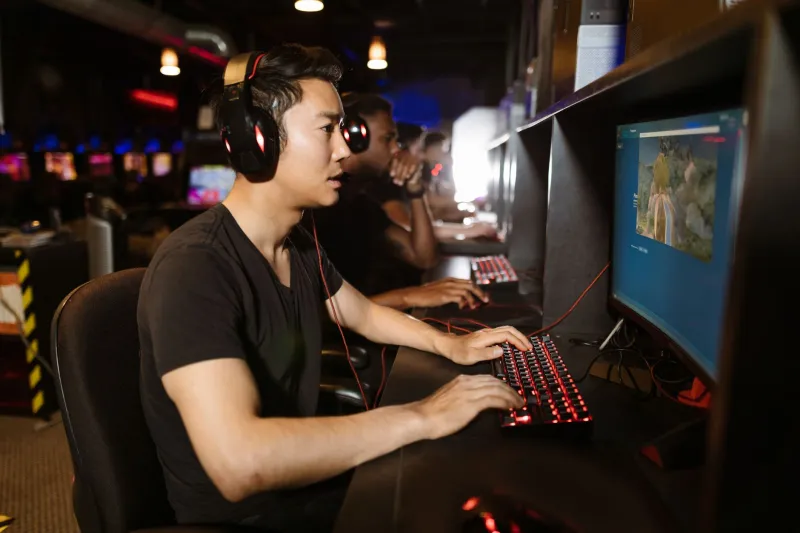
At 8:40 p.m. on a Tuesday in Da Nang, the most important coaching session in the café is happening between two chairs and one monitor. A 19-year-old regular known in the lobby as Minh is paused on a replay, pointing at a minimap circle and asking the player beside him one question: 'What did you think was happening here?' The player, a 27-year-old office worker on his third ranked season, shrugs. Minh rewinds. They watch the same eight seconds four times. No invoice changes hands. Someone brings iced tea. The lesson continues.
This is the informal mentorship economy of Vietnamese game cafés — a loose network of unpaid and low-cost coaches who hold court in quán net, the neighborhood internet cafés that still function as living rooms, practice rooms, and clubhouses. In 2026, as Western coaching platforms sell structured packages for $60 to $150 an hour, Vietnam's most effective coaching often looks like this: a shared table, a single monitor, a queue of spectators, and a coach who is paid in respect, snacks, and the satisfaction of seeing a friend stop making the same mistake.
The classroom is a corner table
The mentorship does not start with a sign-up sheet. It starts with repetition. Cafés have regulars, and regulars have habits. The player who arrives at the same hour, queues the same role, and reacts to losses the same way becomes known. Sooner or later, a stronger regular watches a round, offers one correction, and stays for the next game. If the advice helps, the relationship grows. If it does not, nobody loses face. The cost of trying is low, so feedback moves faster.
These coaches are rarely official. They might be a university student who peaked in the top percentile of a regional ladder, a former semi-pro who now works a day job, or simply a player with unusually good camera habits and a patient voice. Their authority comes from visible competence and community trust, not a certificate. In a café, reputation is public. People can see who actually reviews replays, who stays calm after a bad loss, and who helps beginners without farming them for laughs.
The sessions themselves are small. One monitor, two chairs, a shared keyboard if needed. A phone propped up for a replay. Sometimes the coach plays a support role and narrates decisions in real time. Sometimes they simply sit behind the player and ask questions. The format is flexible because the setting is social. Coaching is not a separate product. It is an extension of hanging out.
Why the free session often beats the paid package
Paid coaching can be excellent. Structured programs, professional VOD review, and scheduled accountability work for plenty of players. But the café model has advantages that are hard to package and sell.
First, it is embedded in the player's actual routine. A US player who buys a coaching session often has to carve out a special hour, perform under a microscope, and then return to a solo queue environment with no follow-up. The café player gets feedback in the same room where they practice, from someone they will see again tomorrow. That repetition matters more than a single brilliant insight.
Second, the coaching is social, not transactional. A paid coach has to manage a client relationship. A café coach can be blunt, joke, pause for noodles, and then return to the replay. The emotional temperature stays low. Players are less likely to tilt when advice feels like a conversation between neighbors rather than a performance review.
Third, the local meta is real. Café coaches know the players, the ping, the hardware, and the habits of the room. They can tell a player to stop contesting a specific objective at 12 minutes because the café's connection spikes during peak hours. A remote coach with a clean setup may not think to ask.
None of this makes formal coaching obsolete. It simply explains why the informal version survives. It is cheap, repeatable, and woven into daily life.
What actually gets taught
The curriculum is not a secret. Lane fundamentals come first: when to trade, when to sacrifice a wave, how to track the enemy jungler, and why a single ward can change a whole minute. Camera habits come next, because many low-rank players lose fights before they ever see them. Communication gets attention too, especially in team games where one calm voice can stop five people from making five different mistakes.
Then there is tilt control. This may be the most valuable lesson. A café coach can see the moment a player's shoulders rise, hear the sigh, and call for a pause. They might say, 'You are not losing because of your hands. You are losing because you are queueing angry.' That sentence lands differently when the coach is sitting beside you and has watched you do it three times.
Good café coaches also teach restraint. They do not dump twenty corrections into one game. They pick one decision, review it, and let the player try again. The goal is not to show off knowledge. The goal is to make the next game slightly cleaner.
How to build the same thing in your city
A US player does not need a Vietnamese café to copy the model. They need a room, a routine, and a few people willing to be useful.
Start with a weekly review night at a local game store, library meeting room, or community center. Bring one laptop and one monitor, or use a TV. Ask people to submit one replay clip, not a whole match. Rotate who gets reviewed. Keep the tone practical: one strength, one mistake, one next step. Do not let the strongest player monopolize the room. The point is not to create a guru. The point is to create a habit.
Online, the same structure works in a Discord server. Set a fixed hour. Use voice chat. Share screens. Keep a simple rule: no review during ranked queue, no unsolicited advice after a loss, and no farming beginners for highlight clips. If someone wants to coach, they should first be willing to be coached.
Cafés and stores can encourage this by leaving one table free for spectating, not just gaming. A second chair is a small investment with a large cultural return. So is a sign that says review night, all ranks welcome.
The fine print
Informal mentorship has limits. It can reproduce bad habits, favor confident voices, and turn into gatekeeping if the wrong person holds court. It can also exclude players who cannot afford to spend hours in a café. The model works best when it stays voluntary, humble, and easy to leave. No one should feel trapped in a lesson.
Still, the core idea is portable. Coaching does not always need a calendar link and a payment page. Sometimes it needs a corner table, a paused replay, and someone patient enough to ask what you thought was happening. That is the café coach's real advantage — not secret knowledge, but proximity, repetition, and care.