Café Mentality vs. Bedroom Grind: The Competitive Mindset Gap Between Vietnamese and American Ranked Players
Open up a ranked lobby in almost any major competitive title — League of Legends, Valorant, Mobile Legends — and you'll find Vietnamese and American players sharing the same queue. Same game. Same patch. Same ranking system. But spend enough time watching how each region approaches the climb, and you start noticing patterns that don't come from the game itself. They come from somewhere much older.
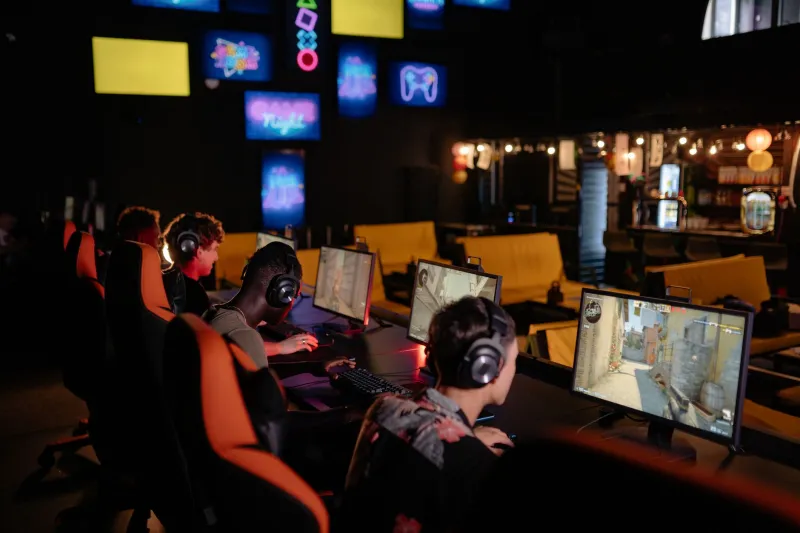
Vietnamese competitive gaming was forged in internet cafés. American competitive gaming was built in bedrooms. That difference in physical environment produced two genuinely distinct competitive philosophies — and those philosophies are still showing up in how each region plays ranked today.
The Café as Competitive Classroom
Vietnam's internet café culture, which peaked in the early 2000s and still maintains significant cultural weight today, created something unusual: a public competitive environment. When you're playing ranked in a room full of twenty other players, you're never truly alone with your game. Wins are witnessed. Losses are visible. Tilt has an audience.
That sounds stressful, but it produced some remarkable psychological adaptations. Vietnamese players who came up in café culture learned early that emotional regulation wasn't optional — you couldn't exactly slam your desk or scream at your monitor without drawing looks from everyone around you. The social environment enforced composure in a way that no amount of mental health advice in a solo queue loading screen ever could.
Beyond emotional control, cafés created a constant low-grade coaching environment. You'd look over at the player next to you and see how they were handling a situation you'd just struggled with. You'd pick up macro decisions, positioning habits, and itemization choices through casual observation. Information spread organically, and the meta in Vietnamese café communities often evolved faster than official patch notes could account for.
The Bedroom Grind and the Myth of Solo Mastery
American gaming culture developed in a fundamentally different physical context. Playing in your bedroom — or your dorm room, or your apartment — means your competitive experience is largely private. Wins and losses are yours alone. Tilt has no social consequences. And the information ecosystem is mediated almost entirely through content creators, Twitch streams, and tier list YouTube videos rather than direct peer observation.
This produced a different kind of player. American solo queue culture prizes individual mechanics and personal optimization. The dominant narrative is the lone grinder who climbs through sheer skill and willpower — a story that resonates deeply with American cultural values around self-reliance and individual achievement.
The flip side is that American ranked culture can be emotionally volatile in ways that Vietnamese café culture structurally discouraged. The tilt rate, the rage-quit frequency, the tendency to blame teammates — these aren't character flaws unique to American players. They're predictable outputs of a competitive environment with no social accountability.
Risk Tolerance: Where the Philosophies Diverge Most Sharply
One of the most measurable differences between Vietnamese and American ranked approaches shows up in risk tolerance — specifically, how each region handles early-game aggression versus late-game scaling.
Vietnamese competitive meta, particularly in League of Legends and mobile titles like Mobile Legends: Bang Bang, has historically favored calculated early aggression. The café environment rewarded players who could read the room quickly and act decisively — hesitation in a café setting, where everyone around you is watching, felt worse than a bold play that didn't work out. This cultural comfort with early commitment shows up at the highest levels, where Vietnamese teams are often noted for their aggressive early-game tempo.
American ranked culture, by contrast, has often leaned toward scaling strategies — letting the game develop, accumulating resources, and making decisive plays from a position of safety. There's a reason late-game carry champions have historically been popular in North American solo queue. The bedroom environment doesn't punish caution the same way a café audience does.
Neither approach is objectively superior. But they do create predictable strategic tendencies that opponents at the international level have learned to account for.
Emotional Regulation as a Regional Skill Gap
Game developers have spent years trying to solve the toxicity problem in ranked play. Reporting systems, honor systems, chat restrictions — none of it has worked as well as just... having other people physically present when you play.
Vietnamese players who grew up in cafés developed emotional regulation as a survival skill. Losing three games in a row in a café means sitting in your frustration visibly, which is its own kind of feedback mechanism. You learn to process loss quickly and move on because the social environment requires it.
American bedroom players don't have that external regulator. The result is that mental game management — staying even-keeled through loss streaks, maintaining decision quality when tilted, avoiding the revenge-queue spiral — is often a bigger differentiator in American ranked than in Vietnamese competitive scenes, where it's more evenly distributed as a baseline skill.
What Each Side Can Learn
This isn't a case where one culture has it all figured out. Vietnamese café gaming is genuinely declining as home internet quality improves and the pandemic accelerated the shift to home setups. The next generation of Vietnamese competitive players is increasingly bedroom-raised, and the cultural transfer of those café-forged habits is something the Vietnamese esports community is actively thinking about.
For American players, the practical takeaways are clear: create social accountability for your ranked sessions. Play with a regular group instead of pure solo queue. Review your sessions with someone else present — even just a Discord call where a friend watches you play. The external witness effect is real, and you can manufacture a version of it without ever setting foot in an internet café.
For the broader industry, the lesson is more structural: competitive game design that creates social environments — spectator modes, community-facing ranked systems, team-based matchmaking — produces healthier and more skilled player bases than systems that optimize purely for individual convenience.
The café shaped a generation of Vietnamese competitors in ways that are still paying dividends on international stages. The bedroom shaped a generation of American players who are exceptionally skilled in isolation and still learning how to be great together. Closing that gap isn't about playing more hours. It's about changing how those hours feel.