Gear Doesn't Win Games — Game Sense Does: The Vietnamese Tech Optimization Secrets That Are Humbling High-Budget Setups
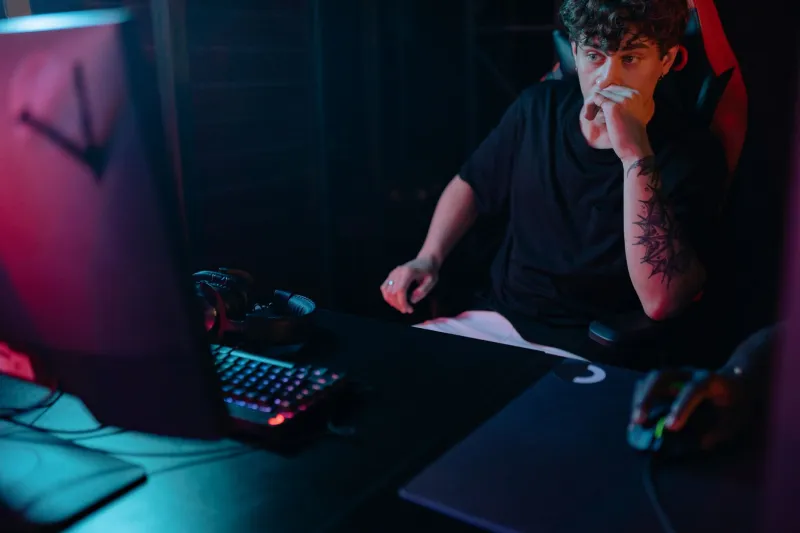
Walk into any high-end gaming setup tour on YouTube and you'll see the same things: RGB everything, a monitor refresh rate that sounds like a car engine spec, and a mechanical keyboard that costs more than some people's rent. The implicit message is always the same — better gear equals better performance. Spend more, play better. It's practically gospel in American gaming culture.
Vietnamese players didn't get that memo. And honestly? They've been winning arguments against it for over a decade.
The Café School of Hard Optimization
To understand where Vietnamese technical ingenuity comes from, you have to understand the environment that forged it. For a huge portion of Vietnamese gaming history, the primary venue wasn't a bedroom with a dedicated rig — it was a shared internet café computer that had been used by dozens of players before you and would be used by dozens more after. You didn't pick your hardware. You worked with what was there.
That constraint created a culture of optimization by necessity. Players learned to squeeze every frame out of whatever machine they were on. Graphics settings became a science. Network configuration tricks got passed around like trading cards. Knowing which in-game settings actually impacted performance versus which ones were just cosmetic became a fundamental skill, not an enthusiast hobby.
The result? A generation of players who understood their hardware at a level most Western gamers — who just buy more powerful gear when something feels slow — never needed to develop.
Specific Techniques That Make the Difference
So what exactly are we talking about? The Vietnamese optimization playbook covers a surprisingly wide surface area.
Resolution scaling over raw resolution. Many Vietnamese players discovered early that dropping internal render resolution while keeping display resolution stable delivered massive frame rate gains with minimal visual quality loss — especially in fast-paced competitive games where reaction time matters more than pretty textures. This technique, now mainstream in titles like Fortnite and Warzone, was a café staple years before Western streamers started talking about it.
Disabling background processes aggressively. While American players often leave a full suite of apps running — Discord, Spotify, browser tabs, update services — Vietnamese players on shared or limited machines developed habits around stripping a system down to only what the game needed. The performance gains on modest hardware are significant, and the habit carries over even when the hardware gets better.
Network prioritization and ping management. Playing on Southeast Asian servers with variable infrastructure taught players to think carefully about connection stability rather than just raw speed. Wired connections, router QoS settings, and choosing the right server region became second-nature considerations. The mental model of 'consistent ping beats fast ping' — counterintuitive to a lot of Western players — is deeply embedded.
Game sense as the ultimate performance multiplier. This one is harder to quantify but arguably more important than any technical tweak. When you can't rely on hardware to give you an edge, you invest in knowledge. Map awareness, ability timing, opponent behavior patterns, economy management — Vietnamese players, especially in titles like Dota 2, CS2, and Mobile Legends, are often operating several mental frames ahead of opponents who are relying on reaction time boosted by expensive peripherals.
What Vietnamese Esports Coaches Are Actually Teaching
Coaches working with Vietnamese competitive teams talk about a foundational philosophy that gets drilled in from day one: your gear is a ceiling, not a floor. The ceiling matters, but most players never get close to it because they haven't developed the floor — the game knowledge, decision-making, and mental discipline that hardware can only amplify, never replace.
One recurring theme in how Vietnamese coaching structures work is the emphasis on review culture. Players are expected to watch their own replays, identify decision errors, and discuss them with teammates. This isn't unique to Vietnam, but the intensity and consistency of it in Vietnamese amateur and semi-pro scenes is notable. When you can't buy your way to better performance, you analyze your way there.
There's also a strong emphasis on role mastery over hero or character diversity. While Western players often chase the new meta pick, Vietnamese players in titles like Dota 2 are frequently known for deeply specializing in a small pool and understanding those picks at a mechanical and strategic level that broader players simply don't reach.
Why This Is Making 'Gear Whales' Uncomfortable
The term 'gear whale' — someone who's spent heavily on hardware and peripherals — isn't necessarily an insult, but the implication in Vietnamese gaming spaces is that the spending is often a substitute for the harder work of actually getting better. And the evidence backs that up.
Competitive data from games with broad hardware accessibility consistently shows that performance gains from high-end gear plateau quickly. The jump from a 60Hz monitor to a 144Hz monitor is real and meaningful. The jump from 144Hz to 360Hz at the amateur level? Much harder to demonstrate in actual match outcomes. Vietnamese players who've been competing on 60Hz monitors for years and winning against 144Hz setups aren't an anomaly — they're a proof of concept.
American gaming culture is starting to absorb this lesson, partly through exposure to Southeast Asian competitive play and partly through the rise of mobile esports, where hardware parity is almost total and game sense becomes the only differentiator.
The Takeaway for US Players
None of this means you shouldn't upgrade your gear when you can. A good monitor and a stable internet connection genuinely matter. But the Vietnamese approach offers a useful reframe: before you spend another $200 on a new mouse, spend 20 hours analyzing your decision-making in your last 50 matches. The ROI on that second investment is almost certainly higher.
Optimize what you have. Master what you play. The gear will catch up eventually — and by then, you'll already know what to do with it.