Why American Gamers Are Hopping on Planes to Play in Vietnamese Internet Cafés
Let's be real for a second. The average American gamer has a pretty solid setup. Maybe a 144Hz monitor, a mechanical keyboard they spent way too long choosing, and a Discord server full of friends they've never actually met in person. On paper, it's everything you need. In practice, something still feels a little hollow.
That hollow feeling is exactly what's sending a surprising number of US players toward Vietnamese gaming cafés — and what's keeping them coming back.
More Than Just a LAN Party
If your only reference point for a "gaming café" is the dusty, fluorescent-lit LAN centers that barely survived the early 2000s in America, you need to seriously recalibrate your mental image. Vietnamese gaming cafés — called quán net locally — are a different beast entirely.
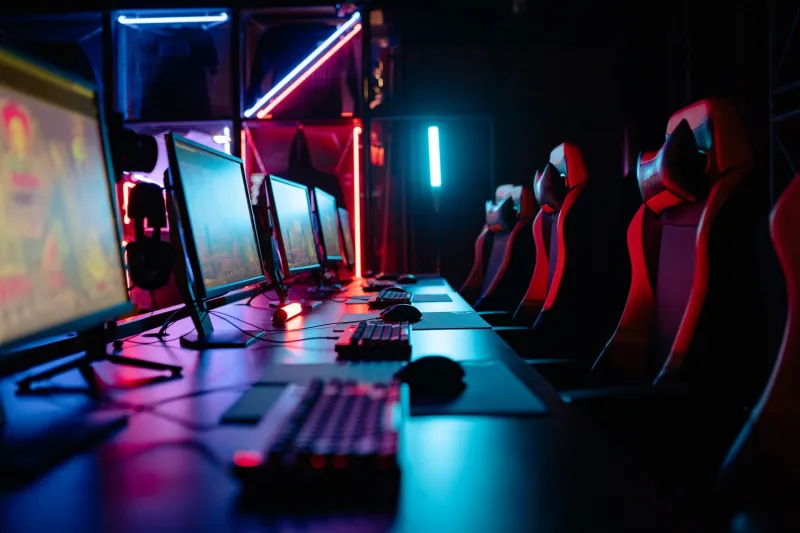
Think high-backed gaming chairs, rows of machines running specs that would make a Best Buy employee nervous, and an atmosphere that hums with something you can only describe as collective focus. These aren't places people stumble into. They're destinations. Regulars show up at the same time every night. They know the staff by name. They know each other by name — or at least by in-game handle, which honestly counts for more in some circles.
Josh M., a competitive Valorant player from Austin, Texas, visited Hanoi last year on a trip that was only half-vacation. "I walked into this café near Hoàn Kiếm Lake and it just clicked immediately," he told us. "Everyone around me was locked in. Nobody was on their phone half-distracted. There was this energy — like everyone understood why we were all there."
That energy is hard to manufacture. American gaming bars have tried. Esports arenas have tried. But there's a structural difference in how Vietnamese cafés are woven into daily social life versus how gaming spaces function in the US.
The Psychology of Shared Screens
Social psychologists have a term for it: co-presence. The idea that doing something alongside other people — even without directly interacting — changes how you experience that activity. It sharpens focus, raises stakes, and creates a sense of accountability that solo home gaming simply can't replicate.
In Vietnam, gaming cafés aren't considered a niche hobby destination. For millions of players, they've historically been the primary place to game — especially for younger players who didn't have personal computers at home. That necessity bred a culture. And that culture developed norms: you come to play seriously, you help the person next to you when they're stuck, and you celebrate wins out loud.
Megan T., a streamer from Portland who visited Ho Chi Minh City for a content project, described a moment that stuck with her. "I was playing a ranked match and this guy next to me — total stranger — leaned over and gave me a callout in broken English. We didn't share a language but we shared a game. He just wanted me to win. That doesn't happen when you're playing from your bedroom."
That kind of organic, low-stakes mentorship is baked into the café environment. Veterans watch newcomers. Tips get passed around like napkins. There's a social contract that says: we're all here for the same reason, so let's make each other better.
The Hardware Gap Nobody Talks About
Beyond the social dynamics, there's a very practical reason American players are impressed: the machines are good. Like, genuinely competitive-grade good.
This surprises people. There's a tendency to assume that cutting-edge gaming infrastructure lives in South Korea or Japan, not Vietnam. But Vietnamese café operators have strong financial incentives to keep their hardware fresh — it's their core product. Many cafés run RTX 40-series cards, high-refresh-rate monitors, and peripherals that cost more than some American gamers' entire setups.
Combine that with the social environment and you start to understand why players who visit these spaces come back talking about them the way people talk about discovering a great local gym. It's not just about the equipment. It's about what the equipment enables when everyone around you is using it with intention.
So Why Hasn't This Model Taken Off in the US?
Fair question. The short answer: American gaming culture developed differently, and home ownership of gaming hardware accelerated faster here than almost anywhere else in the world.
By the time café-style gaming spaces became viable businesses in Vietnam, American players were already deep into the home-console and home-PC era. The cultural need for a shared physical space never fully materialized because the hardware was already in the living room.
There's also a geographic and lifestyle factor. American cities are built around cars and private spaces. Popping into a neighborhood café to game for two hours the way you might grab a coffee — that's not really how most US cities are designed. Vietnam's denser urban environments make the café model a natural fit in ways that suburban America simply doesn't.
That said, some entrepreneurs are watching closely. A handful of esports lounges in cities like Chicago, New York, and Los Angeles are trying to capture a version of this energy — with mixed results. The ones that succeed tend to be the ones that focus less on the hardware specs and more on the culture. Community nights. Regulars. Staff who actually game.
What American Spaces Could Steal (Respectfully)
The Vietnamese café model isn't going to transplant wholesale into the US. That's fine. But there are lessons worth borrowing.
First: community over spectacle. Too many American gaming venues are built around the idea of esports rather than the reality of everyday players. Vietnamese cafés work because they serve regular people playing regular games on a Tuesday night — not just tournament weekends.
Second: investment in the environment. The chairs matter. The lighting matters. The vibe matters. Players notice when a space is designed for them versus designed to look like it's designed for them.
Third: let the regulars lead. The social culture in Vietnamese cafés isn't programmed by management — it emerges from the players. American gaming spaces that try to manufacture community through forced events often miss the mark. Sometimes you just need to give people a good reason to show up consistently, and let them figure out the rest.
The Takeaway
There's something quietly radical about what Vietnamese gaming cafés represent. In an era when gaming is increasingly a solo, screen-mediated, algorithm-optimized experience, they offer a counterpoint: play with people, in person, in a space that takes the whole thing seriously.
American players who've experienced it tend to come home a little restless. Not because their home setup suddenly feels inadequate — but because they've tasted something their Discord server can't quite replicate.
Maybe that's the real VietGame advantage. Not the hardware. Not the latency. Just the reminder that gaming was always meant to be shared.