No Mic, No Problem: How Vietnamese Gamers Mastered Team Play Without Saying a Word
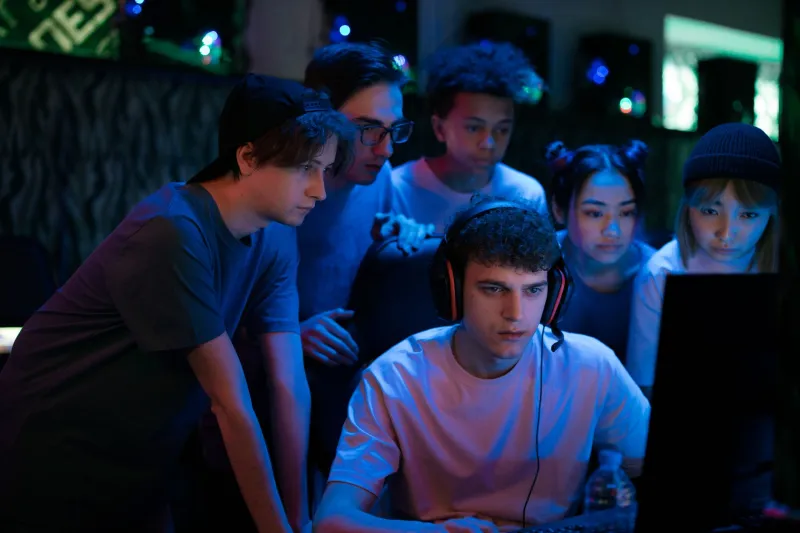
Ask any Western competitive gamer what separates a good team from a great one, and nine times out of ten, the answer involves communication. Discord servers, in-game voice chat, coordinated callouts — the assumption is baked in deep. Talk more, win more. It's basically gospel at this point.
Except Vietnamese players never really got that memo. And somehow, they keep winning anyway.
This isn't an accident or a workaround. It's a fully developed system — one that grew out of real constraints and turned into something genuinely sophisticated. If you've ever queued into a ranked game and gotten absolutely cooked by a coordinated Vietnamese squad that never typed a single word in all-chat, you've already seen it in action. You just didn't know what you were looking at.
Why Voice Chat Was Never the Default
To understand how this culture developed, you have to understand the environment it came out of. Internet cafés — or quán net as they're known in Vietnam — were (and in many places still are) the primary place people play online games. You're sitting in a room full of strangers, headphones on, trying to keep your game audio audible over the ambient noise of thirty other players doing the same thing. Plugging in a mic and talking out loud isn't just impractical — it's genuinely disruptive.
Beyond the physical environment, there's the language dimension. Vietnamese players competing on regional or international servers frequently found themselves in lobbies where Mandarin, Korean, Thai, and English were all flying around at once. Even if you wanted to call out over voice, the odds of your teammates understanding you were slim. Verbal communication became an unreliable channel by default.
So Vietnamese players built something else.
The Ping System as a First Language
If you play League of Legends, Dota 2, or basically any modern team-based game, you know the ping system exists. What you might not know is that Vietnamese players treat it like a full vocabulary.
In Western competitive play, pings are often a supplement to voice — a quick "danger" marker dropped while you're mid-sentence on comms. In Vietnamese soloqueue culture, pings are the primary communication layer. Players develop an almost intuitive fluency with them, reading combinations of pings the way you'd read tone of voice in a spoken conversation.
A single "on my way" ping to the river means something different than two rapid "on my way" pings. A "missing" ping dropped on a ward location tells your jungler something specific about your read on the enemy's position. None of this is written down anywhere. It's absorbed through thousands of hours of play and reinforced by community norms that treat ping literacy as a basic competency, not an advanced skill.
Positional Awareness as a Shared Language
Beyond pings, Vietnamese team play leans heavily on something harder to teach but easier to recognize once you've seen it: positional communication. The idea is that where you move on the map says something to your teammates — and if everyone on your team understands what it says, you don't need to announce it.
This shows up in the way Vietnamese players tend to rotate. Rather than calling out "I'm rotating mid" on voice, a player will simply begin the rotation — and their teammates, reading the minimap, understand what's happening and adjust accordingly. The movement itself is the callout.
To Western players who grew up on explicit verbal coordination, this can look almost telepathic. It's not. It's pattern recognition built on a shared understanding of game state. The difference is that Vietnamese players developed that shared understanding without the verbal crutch, which means their read of the game has to be sharper. You can't fake positional awareness the way you can fake enthusiasm on voice chat.
Predetermined Patterns and Community Meta
Another piece of the puzzle is how Vietnamese gaming communities transmit strategic knowledge. Rather than individual teams developing private playbooks, a lot of Vietnamese competitive knowledge lives in public spaces — forums, YouTube breakdowns, streamer content, and community Discord servers where rotations and draft strategies get analyzed in granular detail.
The result is a kind of shared meta-knowledge. Two Vietnamese players who have never met before and queue into the same ranked game may already have a working understanding of how a given champion combination should be played, what the standard rotation looks like at certain stages of the game, and when to force an objective versus back off. They don't need to talk about it because the community has already done that work.
This is actually closer to how professional esports teams operate than most casual Western players realize. Pro teams run preset plays and rely on players knowing their roles deeply enough that explicit callouts become redundant. Vietnamese soloqueue culture developed a grassroots version of that same infrastructure.
What Western Players Are Leaving on the Table
Here's the uncomfortable truth for anyone who's ever flamed a teammate for not being on voice: heavy reliance on verbal communication can actually mask weaknesses in your game sense. If you're calling out every move, you're not necessarily developing the ability to read the game without that scaffolding. When comms break down — and in competitive play, they always eventually break down — players who depended on voice often fall apart.
Vietnamese players, having developed their coordination through non-verbal channels, tend to be more resilient in those moments. Their game sense is load-bearing in a way that a lot of voice-dependent players' game sense simply isn't.
This doesn't mean voice chat is bad or that you should stop using it. But it does suggest that treating it as the only legitimate form of team communication is leaving real skill development on the table.
The Takeaway for Your Next Ranked Session
So what can you actually do with this? A few things worth trying:
Get intentional with your pings. Don't just spam the danger ping when something goes wrong. Use the full system. Treat each ping like a word in a sentence and think about what combination of pings most accurately describes what you're seeing.
Let your movement communicate. Before you type or talk, ask whether your positioning already tells your team what they need to know. If you're moving to contest Dragon, your teammates should be able to see that and respond. If they can't, that's a minimap awareness problem worth working on — for everyone, including you.
Invest in community meta knowledge. Vietnamese players win soloqueue games with strangers partly because they share a common strategic vocabulary. Engage with your game's community content seriously. Watch breakdown videos. Read patch analysis. The more your baseline assumptions match your teammates', the less you need to say in the moment.
The soloqueue paradox isn't really a paradox once you understand what's underneath it. Vietnamese players aren't winning team games without communication — they're winning them with a form of communication that took years to build and doesn't require anyone to unmute. That's not a workaround. That's a competitive edge. And it's one any player can start developing right now.