Nobody Wants to Play Healer — Except Vietnamese Gamers, and That's Exactly Why They Win
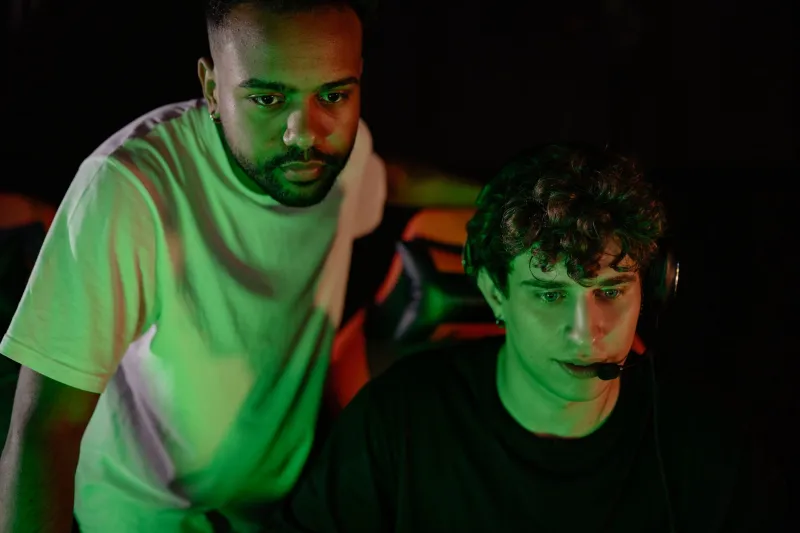
Pop open any lobby in World of Warcraft, Overwatch 2, or Final Fantasy XIV and you'll see the same thing: a queue packed with DPS mains stretching out the door while the healer and tank slots sit empty like the last two seats at a high school lunch table nobody wants to claim. It's a running joke in Western gaming circles — the support role is thankless, invisible, and apparently beneath most players' dignity.
Then there's the Vietnamese gaming community, where the calculus works completely differently.
Across MMOs, MOBAs, and team-based shooters, Vietnamese players have developed a reputation for gravitating toward support positions with a consistency that surprises a lot of American gamers. It's not a coincidence, and it's not just a numbers game. There's something culturally and strategically deliberate happening here — and once you understand it, you start to wonder why Western gaming culture ever decided that racking up kills was the only way to matter.
The Glory Trap and Why American Players Fall Into It
Let's be honest about what's driving the DPS obsession in American gaming culture. Damage numbers pop up on screen. Kill feeds broadcast your name. Post-match stat screens rank players by eliminations, and streaming culture has built an entire economy around highlight-reel moments — the clutch 1v5, the 360 no-scope, the ace that ends the round.
The whole ecosystem rewards visibility. And support roles, almost by design, are invisible. A great healer doesn't show up in the kill feed. A tank who peels perfectly for their carry doesn't get a Play of the Game. The work is structural — it holds everything else together — but the reward loop in most games doesn't reflect that, and Western gaming culture has followed those incentives straight into a DPS addiction.
The result? Perpetual queue imbalances, raid groups that collapse because nobody wants to off-tank, and ranked lobbies where five players are fighting over who gets to carry instead of figuring out who's going to make the carry possible.
What Vietnamese Gaming Culture Actually Values
The Vietnamese gaming scene developed in a very different environment. Internet cafes — or quán net — were the original home base for a generation of Vietnamese gamers. These weren't solo experiences. You were sitting elbow-to-elbow with your friends, and the games that thrived in that setting were deeply team-oriented. Audition Online, early Võ Lâm Truyền Kỳ servers, MU Online — these were games where your crew's collective performance determined everything, and where someone had to fill the unglamorous roles or the whole operation fell apart.
That environment baked in a different set of values. In a space where everyone could literally see each other playing, the social currency wasn't just your personal kill count — it was whether your team won, and whether you pulled your weight in whatever role was needed. Stepping up as a healer when nobody else wanted to wasn't a sacrifice; it was respected. It was the move.
That ethos carried forward. Even as Vietnamese gamers moved onto global servers and international titles, the instinct to ask "what does the team need?" before "what do I want to play?" stuck around.
The Competitive Edge This Creates
Here's where it gets interesting from a pure performance standpoint. Teams that have reliable support players don't just win more — they win differently. They have a structural resilience that DPS-heavy lineups simply lack.
Look at Vietnamese esports squads competing in regional and international tournaments. One pattern that analysts consistently point to is the depth and discipline in non-carry roles. Teams built around strong support infrastructure can adapt mid-series, absorb pressure, and extend games long enough to find windows that pure aggression would never create. It's not flashy. But it works.
In League of Legends, for example, the role of the support player has evolved into one of the most tactically complex positions in the game — vision control, roam timings, engage patterns, peel rotations. Vietnamese players who grew up valuing these roles have had years of reps in positions that most Western players only reluctantly touch when there's no other option. That experience gap shows up in organized play.
Guild raiding in MMOs tells a similar story. A Vietnamese-led raid team that has three or four players who genuinely want to heal or off-tank is operating with a structural advantage over a Western guild where those slots are filled by whoever drew the short straw that week. Morale matters. Players who enjoy their role perform better in it. That's not complicated, but it's consistently underestimated.
The Unglamorous Backbone Problem
Western game developers have started to notice the queue imbalance issue and have tried various fixes — bonus rewards for healers in WoW, role queue in Overwatch, visual reworks to make support abilities feel more impactful. Some of it helps. None of it fully solves the underlying cultural issue, which is that the reward systems and streaming culture still treat DPS as the prestige position.
Vietnamese gaming culture doesn't need the game to fix it externally because the internal values already account for it. When your community genuinely respects the player who keeps the team alive over the player who gets the flashy kill, you don't need an XP bonus to fill the healer slot.
That's a harder thing to replicate through game design alone. It requires a shift in how gaming communities talk about roles, celebrate contributions, and define what "carrying" actually means.
What Western Players Can Actually Take From This
Nobody's saying American gamers need to abandon their DPS mains. But there's a real competitive lesson buried in how Vietnamese gaming culture approaches team composition.
The next time your ranked squad is stuck in a 20-minute queue because nobody will play support, ask yourself what that's actually costing you. The next time you write off the healer's contribution because they didn't get any eliminations, consider what the scoreboard would look like if they hadn't been there. And the next time you're building a serious raid group or a ranked five-stack, think about whether you've actually filled the roles that matter or just assembled five people who all want the same spotlight.
Vietnamese gamers figured out a long time ago that the player nobody notices is often the reason everyone else gets to look good. That's not a consolation prize. That's the whole game.
VietGame Hub covers gaming culture, community stories, and competitive insights from the Vietnamese gaming world and beyond. Follow us for more takes on what makes this community one of the most fascinating in global gaming.