Never Count Them Out: The Clutch Gene That Makes Vietnamese Gamers Dangerous When They're Down
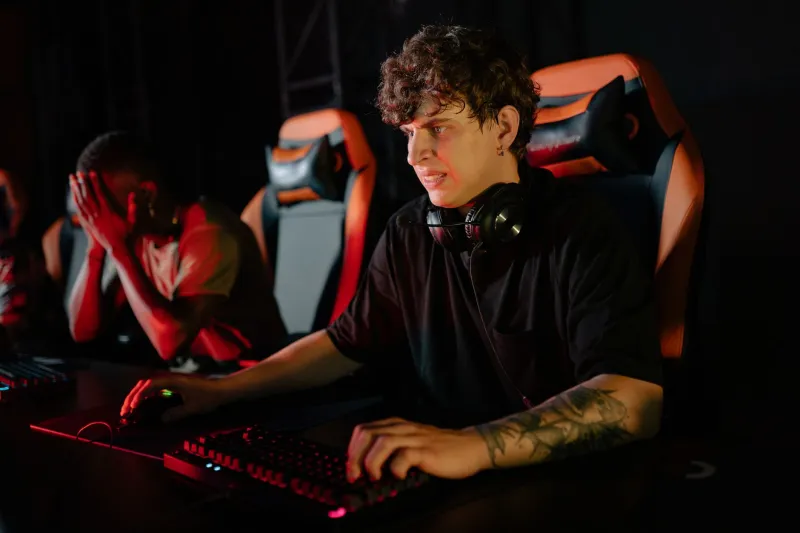
There's a moment every competitive gamer knows. Your team is down four players, the enemy is pushing your base, your economy is in ruins, and the chat is already filling with "gg." Most squads fold right there. But spend enough time watching Vietnamese pro teams — or grinding ranked queues on Southeast Asian servers — and you start to notice something different. The Vietnamese players? They're still playing like they're up by twenty.
That's not hype. That's a pattern. And it runs way deeper than mechanical skill.
The Comeback Is Baked Into the Culture
To understand why Vietnamese gamers are so freakishly composed in high-pressure situations, you have to step outside the game for a second. Vietnam's modern history is essentially a masterclass in making something out of nothing. Generations of Vietnamese people have navigated economic hardship, rapid social change, and resource scarcity — and they've done it with a cultural emphasis on kiên nhẫn (patience) and bền bỉ (perseverance) that gets passed down in ways people don't always consciously recognize.
That ethos shows up in gaming communities in a very real way. Veteran players in Vietnamese Discord servers and gaming cafés don't just celebrate wins — they celebrate how you played when things went sideways. A flashy comeback gets more respect than a clean stomp. Grinding through a deficit isn't seen as desperation; it's seen as the actual test of a player's worth.
Western gaming culture, by contrast, tends to reward dominance. The clean game, the perfect KDA, the flawless speedrun. Falling behind often triggers a kind of psychological shame spiral — you're "tilted," you "should've surrendered," you "wasted everyone's time." It's a subtle but massive difference in how each community defines what good play even looks like.
Risk Tolerance Isn't Random — It's Trained
Psychologists who study decision-making under pressure have found that risk tolerance is heavily shaped by repeated exposure to high-stakes scenarios. People who regularly face uncertain outcomes — and who are rewarded culturally for pushing through rather than retreating — develop a genuinely different cognitive response to threat.
Vietnamese gamers, especially those who cut their teeth in the intensely competitive café gaming scene of the 2000s and 2010s, grew up in exactly that environment. Café culture meant playing in front of strangers, losing real money (or café time credits) on outcomes, and being judged publicly in real time. There was no private ranked queue where you could quietly flame your teammates and log off. You were visible. Your reaction to a bad situation was on display.
That kind of pressure either breaks players or forges something genuinely unusual in them. For a lot of Vietnamese gamers, it forged the ability to make clear-headed decisions when every emotional signal in their brain is screaming to panic.
Pro players like Đỗ "Levi" Duy Khánh — the legendary Jungler who became famous for turning League of Legends team fights that looked completely unwinnable — have talked in interviews about learning to "play the next play" rather than grieving the last one. It's almost athletic in its simplicity, but it's incredibly hard to actually do under tournament conditions.
Real Moments That Became Mythology
If you follow the League of Legends Championship Series or any major VALORANT tournament, you've probably seen the clips. GAM Esports at Worlds, running a defense that statistically had no business working. CERBERUS Esports piecing together a mid-game reset so precise it looked choreographed. These aren't lucky flukes — they're the product of teams that have literally practiced what to do when everything is going wrong.
The Vietnamese esports scene invests heavily in what coaches call "deficit scenarios" — practice sessions where teams are deliberately put into losing positions and required to find paths back. It's uncomfortable. It's not fun in the way a normal scrim is fun. But it builds a muscle memory for comeback thinking that shows up exactly when it matters most.
Compare that to how a lot of Western teams approach practice: heavy emphasis on perfecting early game execution, macro rotations, and winning from ahead. Those are legitimate skills. But there's comparatively less structured work on the psychological and tactical toolkit for losing positions. When Western teams hit a deficit, they're often improvising. Vietnamese teams are running a plan.
What US Players Can Actually Take From This
You don't have to move to Hanoi to develop a better clutch mentality. But you do have to be willing to rewire some assumptions about what "good" gameplay means.
Stop treating a deficit as a verdict. In most competitive games, a losing position is a problem to solve, not a conclusion. Vietnamese gaming culture treats it that way instinctively. Try consciously reframing a bad game state as a puzzle rather than a failure.
Practice losing on purpose. Sounds weird, but deliberately putting yourself in ranked games where you're already behind — and committing to playing them out rather than surrendering — builds exactly the kind of composure that clutch moments demand. You're not going to win all of them. That's the point.
Let the community hold you accountable. One of the underrated reasons Vietnamese players develop resilience faster is that their communities actively reinforce it. If your squad has a culture of "gg at 15" and instant surrenders, that culture is training you to fold. Find or build a crew that respects the fight-back.
Study the deficit, not just the highlight. When you watch Vietnamese esports VODs, try watching the losing team as much as the winning one. Notice how they communicate, what rotations they attempt, where they find small advantages to chip away at the deficit. That's the real education.
The Mindset Is the Mechanic
Here's the thing that tends to get lost in conversations about Vietnamese gaming excellence: the mechanics matter, sure, but the mental game is where the real gap shows up. Any high-level player can execute a combo in a clean scenario. The question is whether you can execute it when you're down two rounds, your hands are shaking slightly, and half your team is already mentally checked out.
Vietnamese gaming culture has been quietly building an answer to that question for decades. The comeback isn't a surprise. It's a skill — one that gets practiced, celebrated, and passed down through communities with the same care as any other part of the game.
Western players who want to get serious about competitive gaming would do well to stop asking "how do I win from ahead" and start asking "how do I play when I'm behind." Because that's where championships are actually decided. And if you need a model for how to do it, you know where to look.