GG No Re: How Vietnamese Gaming Slang Is Quietly Becoming the Internet's Common Tongue
Something strange is happening in your favorite game's chat window. Between the rage quits and the clutch plays, you might have spotted phrases that don't quite match the usual English-internet blend you're used to. Words like "cày", abbreviations like "AFK" used in ways that feel slightly different, or expressions that carry a weight and specificity that regular gaming lingo just doesn't capture.
Welcome to the slow, fascinating bleed of Vietnamese gaming culture into the global online lexicon. It's not a headline moment — nobody dropped a press release. It happened the same way all great slang spreads: organically, through play, through competition, and through the kind of repeated in-game interaction that eventually makes a foreign phrase feel like your own.
Why Vietnam, and Why Now?
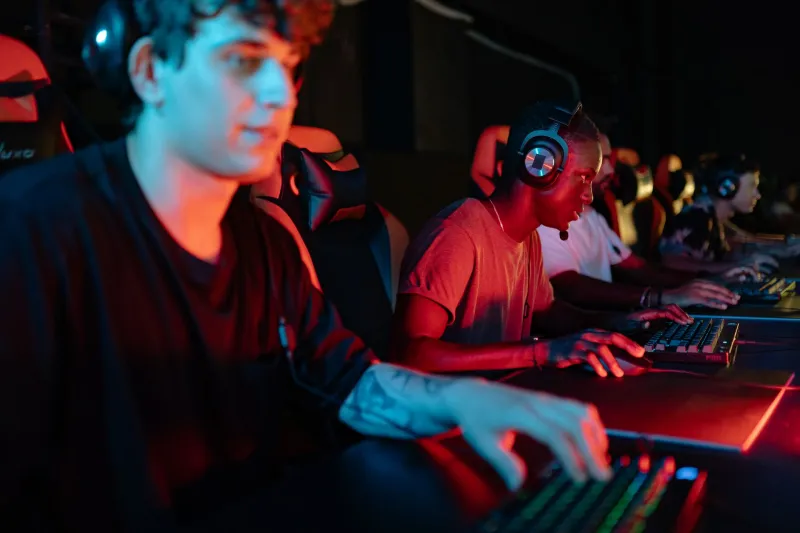
Vietnam's gaming scene didn't just arrive. It evolved through decades of internet café culture, mobile-first gaming infrastructure, and an intensely competitive online environment where communication had to be fast, precise, and expressive. When you're grinding ranked matches in a packed café at 2 a.m. with fifty other players around you, you develop shorthand that works under pressure.
The country also has one of the youngest and most digitally connected populations in Southeast Asia. Vietnamese players have been active in massive global titles — League of Legends, Mobile Legends: Bang Bang, Liên Minh Huyền Thoại (the localized LoL), PUBG Mobile — for years. That kind of sustained presence in shared online spaces leaves a mark.
And then there's the streaming explosion. Vietnamese content creators built massive audiences not just domestically but across the Vietnamese diaspora in the US, Australia, and Europe. American viewers of Vietnamese gaming streams started picking up phrases the same way anyone picks up slang from a show they binge — passively, repeatedly, until it just sticks.
The Phrases That Made the Jump
Let's get specific, because that's where it gets interesting.
"Cày" (pronounced roughly like "kay" with a falling tone) literally means "to plow" — as in farming. In Vietnamese gaming culture, it became the go-to word for grinding: the repetitive, often tedious process of farming resources, leveling up, or ranking through matches. The word carries a blue-collar dignity that the English word "grind" doesn't quite match. When Vietnamese players call someone a cày thủ (a grinding master), there's genuine respect in it. That nuance has started showing up in English-language gaming forums, particularly in communities that overlap with Southeast Asian player bases.
"Noob làng" — roughly translating to "village noob" — is a layered insult that implies someone is not just inexperienced, but hopelessly out of their depth, like they've never left their hometown. It's funnier and more specific than just calling someone a noob, and that specificity is exactly what makes slang travel.
"Gánh team" means to "carry the team" — but in Vietnamese gaming culture, it's used with a particular weariness that implies you've been doing it for way too long and your teammates have absolutely no intention of improving. American players who've spent time in SEA servers recognize the feeling immediately, and the phrase captures it better than anything in English.
"Hít đất" (literally "eat dirt" or "kiss the ground") means dying in-game. It's visceral, visual, and immediately funny in a way that "you died" simply isn't. You'll find variations of this showing up in bilingual gaming communities across Reddit and Discord.
The Discord Effect
If you want to understand how this actually spreads, look at Discord. Multilingual gaming servers — especially those built around SEA-popular titles — are natural mixing chambers for slang. A Vietnamese-American player in a Houston-based gaming server doesn't switch off their linguistic habits when they log in. They bring their whole vocabulary with them.
Server moderators and community managers have noticed. Some have started pinning "slang glossaries" that blend English, Vietnamese, Filipino, and Indonesian terms, treating the multilingual chaos not as a problem to manage but as a feature of the community's identity. That's a significant shift. It means the slang isn't being filtered out — it's being documented, shared, and taught.
Twitch and YouTube communities around games like Mobile Legends and Genshin Impact have similar dynamics. Comment sections look like linguistic experiments. And when a phrase shows up in enough comments, enough stream clips, enough meme templates, it stops being "Vietnamese slang" and starts being just... slang.
What Western Players Are Actually Responding To
Here's the thing about slang adoption: people don't borrow words they don't need. When a phrase travels, it's because it fills a gap.
English gaming slang has gotten pretty standardized. "GG," "noob," "carry," "feed" — these work, but they're also worn smooth from overuse. Vietnamese gaming vocabulary, forged in a different competitive environment with different cultural values around effort, hierarchy, and humor, brings fresh texture.
American players in particular seem drawn to the expressions that capture emotional states with unusual precision. The exhausted heroism of gánh team. The respectful acknowledgment of effort in calling someone a cày thủ. The dark comedy of hít đất. These phrases don't just describe what happened — they editorialize it, and that's exactly what good slang does.
A Two-Way Street
It would be wrong to frame this as Vietnamese culture simply exporting itself to a passive Western audience. The exchange goes both ways, and that's what makes it genuinely interesting.
Vietnamese gaming communities have absorbed English gaming terms for years, often remixing them in ways that produce something entirely new. The Vietnamese version of "AFK" (away from keyboard) gets used with specific tonal markers that shift its meaning slightly depending on context — it can be neutral, annoyed, or even affectionate depending on who's saying it and when.
This is how living languages actually work. They don't transfer cleanly from one group to another. They collide, remix, and produce something that belongs to everyone who uses it and nobody who invented it.
What This Means for the Future of Online Communities
The gaming internet has always been a place where geography matters less than shared interest. But shared interest used to mean shared language — specifically, English. That assumption is quietly eroding.
As Southeast Asian player bases grow, as Vietnamese-American communities build larger and louder presences in US gaming culture, and as streaming makes linguistic exposure effortless, the idea of a single dominant gaming language starts to look less inevitable. What's emerging instead is something more like a creole — a hybrid communication style that borrows from wherever the best words live.
For Vietnamese gaming communities, this isn't just a cultural moment. It's validation. Years of developing a rich, specific, expressive gaming vocabulary in relative obscurity, and now watching pieces of that vocabulary show up in spaces that didn't even know Vietnam had a gaming scene five years ago.
For American players, it's an invitation. Learning a few phrases isn't just about being cosmopolitan — it's about getting access to a more expressive way of talking about something you already love.
So next time you're deep in a ranked session and your teammate is clearly gánh team-ing while everyone else hít đất, you'll know exactly what to say in the post-game chat.
And honestly? That's kind of beautiful.