Squad Up at Home: Your Step-by-Step Guide to Building a Gaming Space With Real Community Energy
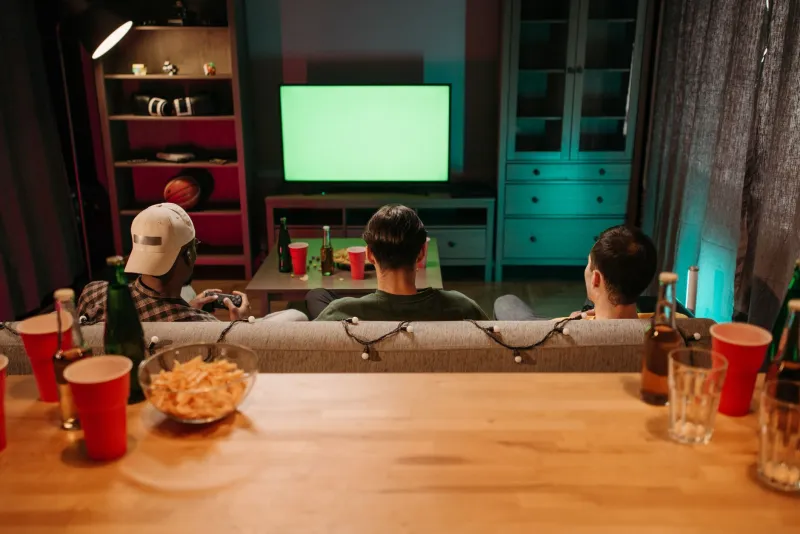
Anybody who's spent time in a Vietnamese internet café knows the feeling. It's not just the rows of monitors or the surprisingly good air conditioning. It's the ambient hum of fifteen people all locked in, the occasional burst of noise when someone clutches a round, the quiet but persistent social pressure of not being the guy who tilts and logs off early. There's an energy in those spaces that most American home gaming setups simply don't replicate — even the expensive ones.
The gap isn't hardware. It's architecture — social architecture. And you can build it.
Understanding What Makes the Café Model Actually Work
Before you start rearranging furniture, it's worth understanding what Vietnamese internet cafés are actually optimizing for, because it's not what most people assume.
Yes, they have decent PCs and fast internet. But those are table stakes. The real engine of the café experience is ambient accountability. When you're in a physical space with other people who are also grinding, leaving early feels like a statement. Tilting publicly feels worse than tilting alone. Winning feels more real when someone next to you sees it happen.
American home gaming culture defaults to isolation — your room, your headset, your Discord call with people who are also physically alone. That setup is comfortable, but it's not the same as shared physical space. The goal of this guide is to close that gap as much as geography allows.
Step 1: Redesign the Physical Space for People, Not Just Screens
Most US gaming setups are optimized for one person. The chair is positioned for one sightline. The desk faces a wall. There's nowhere for a second person to sit comfortably and watch without craning their neck.
Start by treating your space as a venue, even if it's a bedroom or a finished basement. That means:
Facing the screens outward. Position monitors so someone standing or sitting behind the primary player can see the action without asking. This single change makes spectating natural rather than awkward — and spectating is how community develops around play.
Adding a secondary seating tier. A couch, a couple of camp chairs, a bean bag — whatever fits your space. The point is that people can be present and engaged without competing for the primary seat. Vietnamese cafés almost always have some form of this: a spot where you can watch your friend's round before jumping on a machine yourself.
Creating a shared display option. A TV connected to a console or a streaming source that can show a match while people wait their turn builds the "watching together" dynamic that's central to café culture. An Amazon Fire Stick and a 40-inch TV in the corner of a gaming room costs less than most gaming peripherals and completely changes the social texture of the space.
Step 2: Build a Session Structure That Creates Accountability
Here's the part most guides skip: the furniture doesn't matter if nobody shows up or everyone leaves after one bad game. Vietnamese café culture works partly because the environment is external to your house — you made a trip, you're paying by the hour, leaving early has friction. Home gaming has none of that friction by default.
You have to build it deliberately.
Establish fixed session nights. Pick two nights a week, same time, non-negotiable. Treat them like a recreational sports league. The consistency is more important than the frequency — two reliable nights beats five nights that always get postponed.
Create a light entry commitment. Vietnamese café regulars often have informal tab systems or group packages — small financial stakes that create follow-through. You can replicate this with something as simple as a group Venmo pool: everyone throws in $5 at the start of the month, and the pot goes to whoever wins the month's internal standings. The amount doesn't matter. The commitment does.
Track and post results publicly. A shared Google Sheet, a Discord channel with a pinned scoreboard, even a whiteboard in the physical space — visible progress creates the social proof that keeps people engaged. Vietnamese café regulars often know each other's ranks and recent results without having to ask. That ambient awareness of collective progress is quietly motivating.
Step 3: Run Your Own In-House Tournaments
This is where the café mentality really crystallizes into something American gaming culture rarely replicates at the local level. Vietnamese cafés frequently host informal bracket tournaments — sometimes organized by staff, sometimes self-organized by regulars — that give the grind a competitive shape.
You don't need a prize pool or streaming setup to make this work. Here's a minimal viable format:
Monthly single-elimination brackets for whatever your squad's primary game is. Eight players, three rounds, done in an evening. Use Challonge or Battlefy to generate brackets automatically.
Rotating game nights where the featured title changes each week. This keeps the space from feeling stale and gives everyone a chance to be the best in the room at something. Vietnamese gaming culture embraces multi-genre fluency — the café might run an FPS bracket one night and a fighting game casual session the next.
"Coaching seats" where the person who just lost watches the winner play and offers commentary. This creates the knowledge transfer loop that makes Vietnamese gaming communities so collectively sharp. Losing becomes educational rather than just frustrating.
Step 4: Extend the Community Beyond the Physical Space
The final piece of the café model that translates to American home setups is the between-session culture. Vietnamese café regulars don't just play together — they talk about games constantly in between sessions. Strategies get debated, clips get shared, upcoming patches get analyzed days before anyone logs on.
Create the digital infrastructure for that ongoing conversation:
- A dedicated Discord server (or at minimum a server channel) just for your local group, separate from whatever public servers you're already in.
- A shared clip channel where everyone posts highlights, fails, and interesting plays between sessions. Reaction culture keeps the group's attention on each other's gameplay.
- A weekly "patch notes" discussion thread where someone — rotate the responsibility — summarizes what changed and what it means for your group's main games.
None of this is complicated. All of it compounds. The Vietnamese internet café didn't become a cultural institution because the chairs were comfortable. It became one because the social infrastructure kept people coming back, kept them invested in each other's improvement, and made the act of gaming feel like something you did together rather than something you did alone in adjacent rooms.
You've got the hardware. Now build the community around it.