Why Playing With Strangers Might Be the Loneliest Thing in Gaming — And What Vietnamese Squad Culture Gets Right
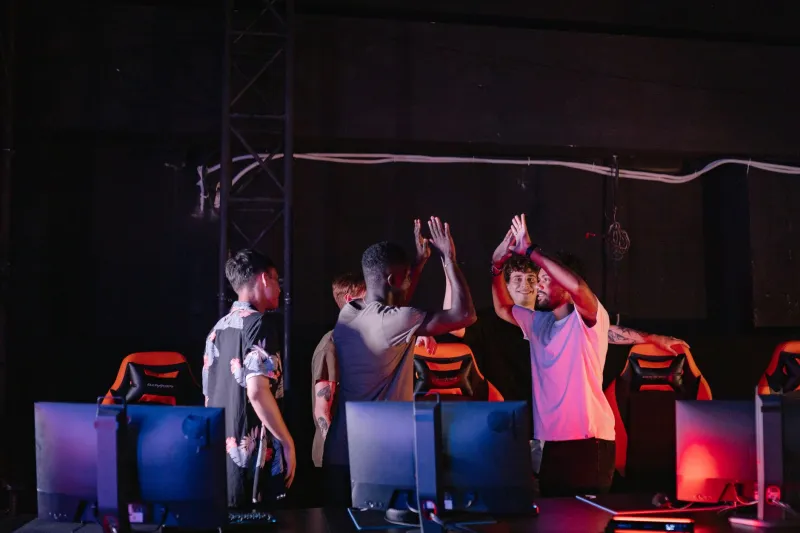
There's a particular kind of frustration that every solo queue veteran knows. You queue up, get matched with four strangers, someone tilts in the first five minutes, the chat turns toxic, and by the end you're wondering why you even opened the game. You log off feeling worse than before you played.
This isn't a bug in the system. For a lot of Western gaming culture, it's kind of the point. Ranked ladders are built around individual performance metrics. Matchmaking treats teammates as temporary, interchangeable variables. The whole architecture pushes you toward playing for yourself first.
Vietnamese gaming culture took a very different road. And American players who've discovered it are having a hard time going back.
Where the Squad Mentality Comes From
You can't talk about Vietnamese gaming culture without talking about the quán net — the internet café. For years, this was where Vietnamese gaming happened. Not in isolated bedrooms, but in shared physical spaces where your friends were literally sitting next to you.
When your teammate is the guy two chairs over who you walked to the café with, the relationship to cooperation changes fundamentally. You're not playing with a random username — you're playing with a person whose face you can see, whose reaction you'll witness, whose mood will affect the walk home. That proximity builds a different kind of investment in each other's performance.
Even as home gaming has grown more accessible in Vietnam, the social DNA of the quán net persists in how Vietnamese players approach online squad play. The expectation of loyalty, communication, and mutual accountability didn't disappear when gaming moved into living rooms — it got baked into the culture.
What Vietnamese Squad Play Actually Looks Like
It's worth being specific here, because "team-oriented play" can mean a lot of things. Vietnamese squad culture has some distinct characteristics that set it apart from generic "just play with friends" advice.
Long-term squad commitments over pickup groups — Vietnamese competitive communities tend to form stable, recurring groups rather than assembling fresh each session. These squads develop internal languages, preferred strategies, and genuine accountability to each other's improvement. It's closer to joining a recreational sports league than queuing up with whoever's online.
Communication norms that prioritize information over ego — In Vietnamese squad play, callouts are functional and frequent. But there's also a strong cultural norm against the kind of blame-shifting that poisons so many Western voice chats. When something goes wrong, the conversation moves toward "how do we fix this" faster than "whose fault was that."
Shared identity and shared stakes — Vietnamese gaming squads often develop genuine group identities — team names, inside jokes, shared histories across dozens or hundreds of sessions. The success of the group becomes meaningful in a way that a solo rank number simply can't replicate.
The American Solo Queue Problem
Let's be fair to the Western gaming context. The US gaming market is enormous and geographically spread out. You don't have the density of a Vietnamese city where your whole friend group might live within walking distance of the same internet café. American gaming grew up in bedrooms and dorm rooms, shaped by a cultural emphasis on individual achievement.
And the games themselves reinforce it. The ranked systems in League of Legends, Valorant, and most major competitive titles are designed to measure individual performance, not team chemistry. Your MMR goes up or down based on outcomes, and the matchmaking algorithm doesn't care whether you had a great time with your squad.
The result is a gaming culture where the default experience is transactional. Teammates are means to an end. Cooperation is strategic, not relational. And when the transaction goes badly — which it does, often — there's no relationship to fall back on.
A 2023 survey by the Entertainment Software Association found that while most American gamers play multiplayer games regularly, a significant majority report that online interactions with strangers are a net negative for their experience. They keep playing, but they're not exactly thriving.
What Happens When American Players Adopt the Squad Model
Something interesting is happening in corners of the US gaming community. Players who've burned out on solo queue are rebuilding their gaming lives around stable groups — and many of them are doing it consciously, having encountered Vietnamese or broader Southeast Asian gaming community norms through streams, forums, or direct friendships.
The pattern tends to look like this: a player joins or forms a consistent group, commits to playing with that group regularly, and gradually finds that their enjoyment of gaming increases even if their individual rank doesn't move dramatically. The wins feel better. The losses are easier to shake off. The game becomes a social experience again rather than a performance review.
This tracks with what psychological research tells us about cooperative social activities generally. Shared goals and mutual investment in outcomes are among the strongest drivers of social bonding. Vietnamese gaming culture stumbled onto this through necessity and community — American gamers are discovering it through frustration and experimentation.
Building Your Own Squad Culture
If the solo queue grind is wearing you down, here's how to start applying the Vietnamese squad model without moving to Hanoi:
Commit to consistency over convenience — The value of a stable squad comes from repetition. Schedule sessions, show up reliably, and treat the group's time as worth protecting. The chemistry that makes squad play meaningful develops over dozens of sessions, not one.
Establish communication norms early — Have an explicit conversation about how your group wants to handle losses, disagreements, and performance slumps. Vietnamese squads develop these norms organically through shared culture; you might need to be more intentional about it.
Celebrate group wins, not just personal highlights — Shift the highlight reel mentality. The best play of the night isn't always the flashiest individual moment — sometimes it's the coordinated push that your squad executed perfectly. Make that worth celebrating.
Find your community anchor — Whether it's a Discord server, a game-specific community forum, or a local gaming group, having a larger community context around your squad gives it staying power. Vietnamese squads are embedded in broader communities; that context matters.
The Real Upgrade
PC components will keep getting more expensive. Ranked ladders will keep churning out frustrating match-ups. But the thing about Vietnamese squad culture is that it doesn't require better hardware, a higher rank, or a bigger budget.
It just requires showing up for each other — consistently, over time, with genuine investment in the group's experience.
That might be the most underrated upgrade available to American gamers right now. And it doesn't cost a thing.