The People's Anti-Cheat: How Vietnamese Gaming Communities Are Outpacing Official Esports Watchdogs
Let's be honest — if you've spent any real time in ranked lobbies, you've run into a cheater. Maybe it was a suspiciously precise aimbot, a wallhacker who knew exactly where you were hiding, or someone whose stats just didn't add up. You filed a report. You waited. And then... nothing. Sound familiar?
Here's the thing: while Western esports orgs keep pouring money into automated detection systems that still miss glaring offenders, Vietnamese gaming communities have been quietly running a parallel operation that's arguably more effective. And it doesn't cost a dime.
The Forum as Courtroom
Anyone who's spent time lurking on Vietnamese gaming forums — places like GameK, VNSharing, or community Discord servers tied to popular titles like Liên Quân Mobile and Đột Kích — knows these spaces operate differently from your average Reddit thread. They're not just places to share memes or argue about patch notes. They function more like neighborhood watch programs with a serious commitment to receipts.
When a suspected cheater surfaces, community members don't just complain. They build cases. We're talking compiled kill-cam footage from multiple matches, side-by-side stat comparisons, timeline threads showing behavioral patterns across dozens of sessions. A single suspicious player might have a 40-post thread dissecting their movement data before anyone even tags a moderator.
This level of organized scrutiny isn't accidental. It's cultural.
The Café Connection
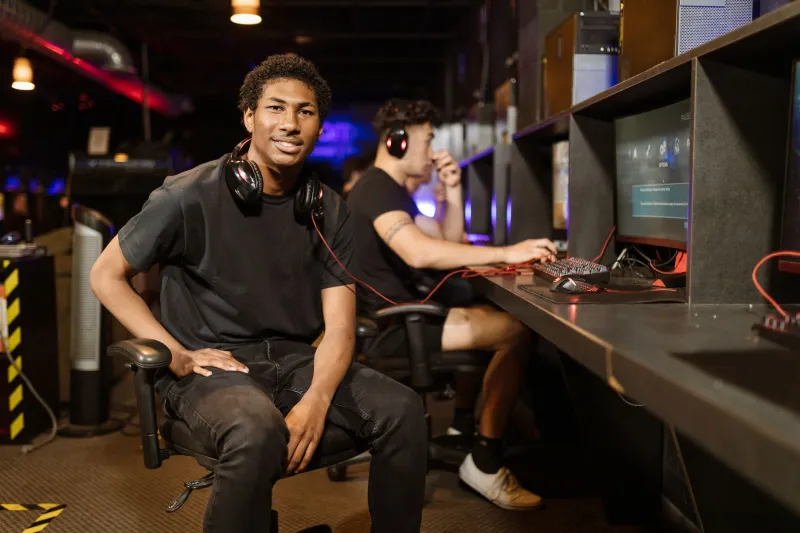
To understand why Vietnamese gamers take fair play this seriously, you have to understand where a huge chunk of Vietnamese gaming actually happens: the internet café. These aren't the dusty, flickering-screen arcades of the early 2000s. Modern Vietnamese gaming cafés — called quán net — are sleek, well-staffed social hubs where regulars know each other by username and reputation.
When you're playing in a shared physical space, your behavior is visible in a way that solo home gaming simply isn't. If you're caught cheating in a quán net, everyone sees it. Your reputation in that space — and by extension in the online communities tied to it — takes a real hit. That social pressure creates a norm of accountability that online-only gaming communities in the West often lack.
The result? Players who grow up gaming in that environment carry those standards into online spaces. Cheating isn't just a rule violation — it's a social betrayal.
How the Detection Actually Works
So what does this crowd-sourced system actually look like in practice? It breaks down into a few key mechanisms that Western orgs would do well to study.
Clip Archives and Community Databases Active forum members maintain running databases of flagged accounts, complete with video evidence. These aren't just accusation boards — most communities have informal standards for what constitutes credible evidence before a name gets added. Unverified accusations get pushed back on hard, which keeps the system from becoming a witch hunt.
Cross-Server Triangulation Vietnamese players are remarkably good at networking across server regions. If a cheater gets banned on one account and comes back on a smurf, there's a decent chance someone in the community recognizes the playstyle, the timing patterns, even the chat behavior. It's pattern recognition at a human level that automated systems genuinely struggle to replicate.
Developer Pressure Campaigns Here's where it gets interesting for Western esports organizations: Vietnamese communities have a track record of escalating successfully. When internal reporting goes nowhere, these forums organize coordinated outreach — mass tickets, social media threads with compiled evidence, direct contact with regional publisher reps. They don't just complain; they make it professionally inconvenient to ignore them.
What Western Orgs Are Missing
Major esports organizations in North America and Europe have invested heavily in proprietary anti-cheat tech. Riot's Vanguard, Valve's VAC updates, FACEIT's client-side systems — these are serious engineering efforts. But they all share a blind spot: they're reactive and algorithmic. They catch what they're programmed to catch.
Human pattern recognition, especially from players who've logged thousands of hours in a specific game, catches things code misses. A bot doesn't know that a particular player's reaction time has mysteriously improved by 40% in the two weeks since they took a break. A longtime community member might.
Some Western tournament organizers are starting to take note. There's been quiet movement toward community-assisted review panels for lower-tier competitive circuits, particularly in fighting game communities where the player base is smaller and more tight-knit. But it's still the exception, not the rule.
The Trust Architecture
Maybe the most transferable lesson here isn't a specific technique — it's a structural one. Vietnamese gaming communities work as detection systems because they've built trust over time. Players know the forum moderators. Moderators know which community members are credible. There's a reputation economy at work that gives the whole system weight.
American gaming communities tend to be more fragmented, more anonymous, and — let's be real — more prone to using "cheater accusations" as a harassment tool. Building the kind of trust infrastructure that makes crowd-sourced accountability function fairly takes deliberate community management and a cultural buy-in that doesn't happen overnight.
But it can happen. Smaller US-based competitive communities around games like Valorant and CS2 have started developing their own informal accountability networks, and some of them are explicitly looking at Vietnamese forum models for inspiration.
The Bigger Picture
At VietGame Hub, we talk a lot about what the Vietnamese gaming scene has to teach the broader global community. This is one of the clearest examples. It's not about having better technology or bigger budgets. It's about treating your community as a genuine stakeholder in the health of the game — and giving them the tools and culture to act like one.
Cheating degrades everyone's experience. The Vietnamese gaming community decided a long time ago that waiting around for a corporation to fix it wasn't good enough. They built something better themselves.
Maybe it's time the rest of the esports world caught up.