Burning the Midnight Oil: How Late-Night Café Grinders Are Vietnam's Secret Weapon in Global Esports
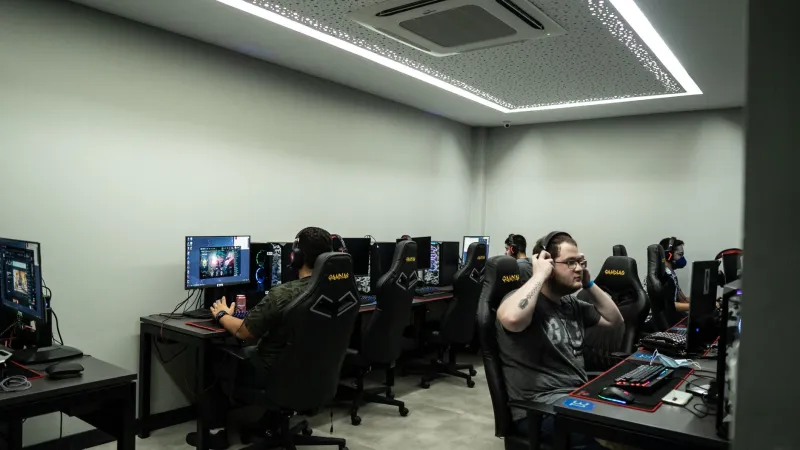
Picture this: it's 1:30 in the morning in Ho Chi Minh City. Outside, motorbikes still weave through narrow streets. Inside a brightly lit internet café, a dozen teenagers are hunched over keyboards, headsets on, faces locked in concentration. Nobody's yawning. Nobody's checking their phone. They're in the zone — and they've been there since dinnertime.
This is the midnight meta. And it's quietly producing some of the most mechanically gifted, mentally resilient competitive gamers in the world.
For American players used to hearing about Korean PC bangs or Chinese gaming academies, Vietnam's late-night café culture might sound like a footnote. It isn't. It's a full chapter — and the rest of the world is only starting to read it.
Why the Night Shift Exists in the First Place
To understand why Vietnamese gamers grind so hard after dark, you have to understand the daytime. School, family obligations, and in many cases part-time work eat up most of the daylight hours for younger players. The internet café isn't just a hangout — for a lot of kids, it's the only place with a fast enough connection and a good enough PC to play at a competitive level.
Night rates at Vietnamese cafés are also cheaper. Off-peak hours mean better server conditions, fewer lag spikes, and — crucially — a lobby full of other serious players who are also there to grind, not mess around. The casual players log off by midnight. What's left is a self-selected pool of competitors who are genuinely hungry to improve.
Coach Minh Tuan, who has worked with several regional Mobile Legends and League of Legends squads, described it this way in a community interview: "When you play at midnight, everyone left in the lobby wants to win. The quality of your opponents goes up. The pressure goes up. You adapt faster because you have no choice."
That's not a training philosophy you'll find in any Western esports textbook. It's something that emerged organically from circumstance — and it works.
The Psychology of Sleep-Deprived Sharpening
Here's where it gets interesting for anyone who follows sports science. Conventional wisdom says sleep deprivation kills performance. And in a vacuum, it does. But what's happening in Vietnamese café culture isn't random sleep deprivation — it's a specific kind of high-stakes repetition under pressure that builds a different kind of mental toughness.
Players who grind through fatigue learn to make decisions when their brain is screaming at them to stop. They develop what some coaches call "noise filtering" — the ability to block out physical discomfort and emotional frustration and focus on the next play. Sound familiar? It's the same quality that separates good clutch players from great ones.
Nguyen "Nova" Hoang, a ranked Valorant player now based in California, talked about his formative years in Hanoi cafés: "I didn't know it was training at the time. I just wanted to play. But looking back, those nights where I was exhausted and still had to outthink someone better than me — that built something. I don't tilt the same way my teammates do. I've already been in worse spots."
Nova's point touches on something American competitive culture often overlooks: adversity as a feature, not a bug.
Structure vs. Chaos — Two Roads to the Top
Western esports organizations have leaned hard into structure. Scheduled scrimmages, mandatory rest periods, sports psychologists, nutritionists, VOD review sessions with analysts. It's professionalized in a way that mirrors traditional sports academies. And it produces excellent players.
Vietnam's grassroots pipeline looks almost nothing like that — at least at the developmental stage. It's messier, more chaotic, driven by passion and peer competition rather than institutional support. Players aren't following a curriculum; they're chasing a feeling. The feeling of getting better, of beating someone they couldn't beat last week, of climbing a rank that felt impossible a month ago.
Both systems have blind spots. Western players sometimes struggle with the raw mechanical intensity of Southeast Asian servers, where the pace is faster and the aggression is constant. Vietnamese players who make it to international stages occasionally face challenges adapting to structured team environments with strict schedules and communication standards.
The most exciting players emerging right now seem to be the ones who've absorbed both worlds — the hunger of the café grind and the discipline of organized coaching.
What American Gamers Can Actually Take From This
You don't need to start pulling all-nighters at your local gaming lounge to level up your play. But there are real, transferable lessons buried in Vietnam's midnight meta.
Seek out harder lobbies. Vietnamese café grinders improve fast partly because their competition is relentless. If you're always playing in comfortable rank brackets or against the same friend group, you're not growing. Push into lobbies that make you uncomfortable.
Embrace unstructured play time. Not every session needs a goal or a VOD review afterward. Sometimes just playing freely — experimenting, failing, improvising — builds intuition that structured practice can't replicate.
Reframe tilt. The mental durability that comes out of grinding through exhaustion is real. You can build a version of that by staying in difficult games instead of rage-quitting, by treating losses as data instead of personal failures.
Play with people who are better than you. The midnight lobby self-selects for serious players. You can replicate that by actively seeking out communities and discord servers where the skill level is above your comfort zone.
The Next Generation Is Already Here
Vietnam's esports infrastructure is growing fast — organizations are investing in training facilities, regional leagues are getting more structured, and international scouts are paying attention. The raw talent that came up through café culture is starting to get the institutional support it always deserved.
For the American gaming community, that means the players coming out of Vietnam's competitive scene over the next few years aren't going to be underdogs. They're going to be contenders — forged in late-night sessions, built for pressure, and ready to compete at the highest level.
The midnight meta isn't just a Vietnamese story. It's a preview of where global competitive gaming is heading.