Grind, Die, Repeat: What Vietnamese Gaming Culture Teaches Us About Playing the Long Game
If you've ever hopped into an international lobby and found yourself getting absolutely wrecked by a Vietnamese player who clearly has ten times your patience, you're not imagining it. Vietnamese gamers have carved out a reputation for thriving in genres that punish impatience — roguelikes, MMORPGs with deep progression systems, and games where the grind is basically the whole point. But why? And what can American players actually learn from it?
Let's break it down.
The Economic Backstory You Can't Ignore
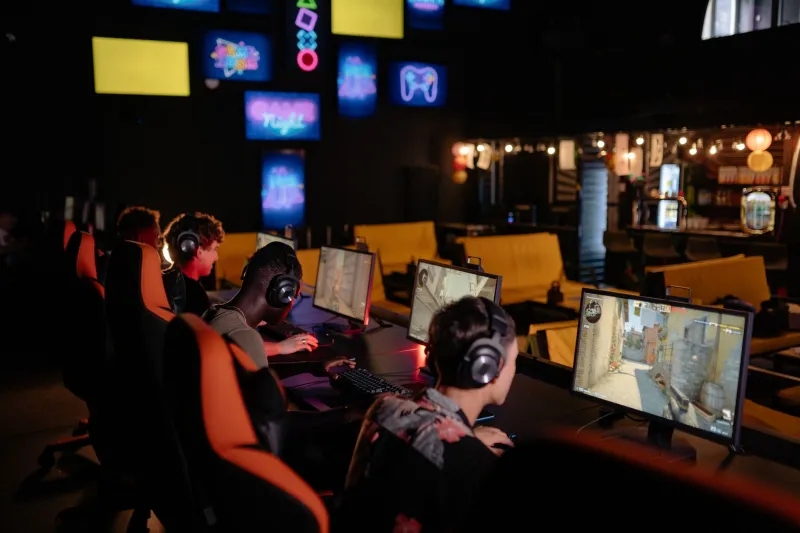
To understand Vietnamese gaming preferences, you've got to look at the context in which gaming culture grew up there. For a long time, personal computers were expensive and internet access was largely accessed through neighborhood internet cafés — not home setups. That meant playtime was a resource you paid for by the hour. When every session costs real money, you're not going to waste it on a game you'll drop in 20 minutes.
This created a player base that gravitates toward games with serious depth. If you're shelling out for café time, you want a game that rewards investment — something with layers to peel back, systems to master, and progression that feels meaningful over dozens of hours. Roguelikes and grind-heavy RPGs fit that bill perfectly. Every run teaches you something. Every death is a lesson. The more you put in, the more you get out.
Even as home gaming setups have become more accessible across Vietnam, those preferences stuck. The culture shaped the taste, and the taste shaped the community.
Why Roguelikes Hit Different in Hanoi
Roguelikes are interesting because they're fundamentally about mastery through repetition. Games like Hades, Dead Cells, or Risk of Rain 2 aren't about getting lucky — they're about learning enemy patterns, optimizing builds, and making smarter decisions with every run. For Vietnamese players who grew up in a gaming culture that valued efficiency and skill-building, this loop is basically catnip.
There's also a social dimension. Vietnamese gaming communities — whether online or rooted in those old café networks — tend to share knowledge aggressively. Tips, builds, routing strategies, and meta discussions spread fast. Roguelikes, with their complex systems and near-infinite build variations, give communities a lot to talk about. The genre feeds community engagement in a way that more linear games sometimes don't.
Compare that to the American gaming mainstream, where a lot of players bounce off roguelikes early because the initial difficulty feels unrewarding. The US market has historically leaned toward games that give you power quickly — open worlds that hand you a massive map and let you feel like a hero within the first hour. There's nothing wrong with that, but it does mean a lot of US players miss out on the deeper satisfaction that comes from genuinely earning your progress.
The Grind Isn't a Chore — It's the Point
Here's a mindset shift that might be uncomfortable for some Western players: in Vietnamese gaming culture, the grind isn't something you tolerate to get to the fun part. The grind is the fun part.
MMORPGs like Lineage II and MU Online were massive in Vietnam partly because they rewarded time investment so directly. Your character's power was a reflection of your dedication. In communities where showing up consistently is a deeply respected quality, a maxed-out character isn't just a gameplay achievement — it's a statement about who you are as a player.
This philosophy has real implications for how you approach any game with progression systems. Instead of treating farming or repetitive mechanics as obstacles, try reframing them as the core loop. Ask yourself: what am I learning? What's getting more efficient? That shift in perspective can turn a tedious farming session into something genuinely satisfying.
Hidden Gems Worth Your Time
If you want to explore games that align with this playstyle, here are a few directions worth exploring:
- Eternal Return — A battle royale survival game with deep crafting and character mastery that rewards patient, strategic players.
- Path of Exile — Already popular in the West, but Vietnamese players have been all over this one for years. The build depth is basically infinite.
- Torchlight: Infinite — A mobile/PC ARPG that scratches the same itch with generous progression systems.
- Dungeon Fighter Online (DFO) — Massively popular in Vietnam and Southeast Asia, this side-scrolling brawler has an almost absurd amount of depth beneath its arcade exterior.
None of these are obscure, but they're all games that reward the kind of patient, community-informed approach that Vietnamese gaming culture has perfected.
What US Players Can Actually Take Away
You don't have to move to Hanoi to adopt a better gaming mindset. Here's the practical version:
Slow down and read the room. Before you bounce off a difficult game, spend some time in its community. Vietnamese gaming communities are incredible at producing guides, tier lists, and beginner tips. Seek that out — Reddit, Discord, YouTube in whatever language you're comfortable with.
Value the process. Pick one game with real depth and commit to it. Not forever, but long enough to actually get good. The satisfaction of mastering a complex system is genuinely different from beating a game on easy mode.
Share what you know. Vietnamese gaming culture thrives on knowledge sharing. If you figure out a cool build or a useful tip, put it out there. Communities get better when everyone contributes.
The Vietnamese gaming scene didn't produce its reputation for skill and patience by accident. It grew out of specific conditions that shaped a specific kind of player — one that American gamers have a lot to learn from. Whether you're a roguelike skeptic or just looking for your next obsession, leaning into the grind might be exactly what your gaming life needs right now.