Reading the Map, Not the Chat: The Unspoken Playbook Vietnamese Gamers Run by Default
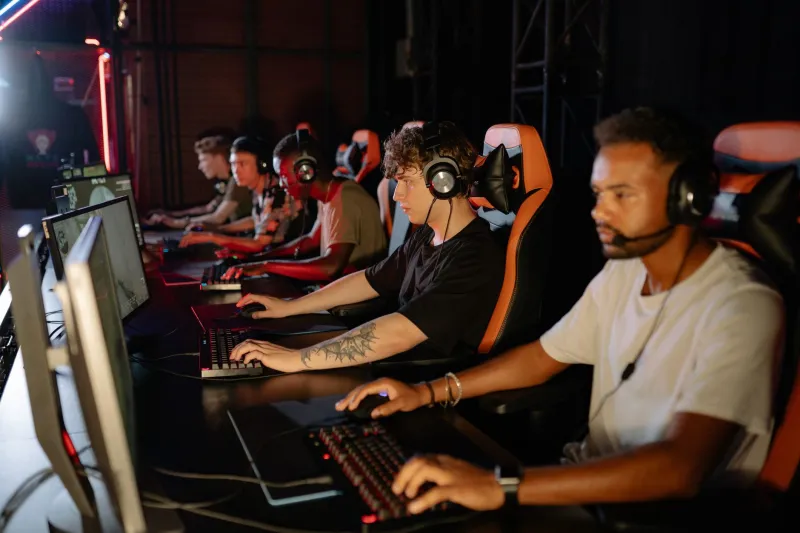
If you've ever queued into a ranked match with a Vietnamese player and wondered how they seemed to know exactly where to be before you even pinged the minimap — you weren't imagining things. There's a whole layer of coordination happening that has nothing to do with Discord, nothing to do with voice chat, and honestly, nothing to do with typed messages either. It's a kind of silent fluency that Vietnamese gaming communities have been building for years, and the rest of the world is only just starting to notice.
Why Silence Became the Strategy
To understand this, you have to think about where Vietnamese competitive gaming culture actually grew up. Internet cafés — or quán net — were the original training grounds. Rows of players packed tight, screens glowing, everyone grinding on the same local servers. In that environment, shouting callouts across a headset wasn't really an option. Neither was expecting your teammates to have premium audio setups.
What players did have was the game itself. The minimap. The ability to watch a teammate's cursor move. The rhythm of how a good player rotates before a fight breaks out. Over time, the community developed a kind of spatial intuition — a way of reading the game state so precisely that verbal confirmation became almost redundant.
This wasn't a workaround. It became a skill set.
The Minimap as a Second Language
Ask any serious Vietnamese League of Legends or DOTA 2 player what separates a good teammate from a great one, and the minimap comes up almost immediately. Not just glancing at it — reading it. Understanding what the absence of an enemy icon means just as much as what the presence of one does.
Western players tend to treat the minimap as a warning system. Vietnamese players treat it like a conversation. Where your jungler hasn't been tells you where they're going. How long a lane has been quiet tells you when it's about to explode. The map isn't just showing you the present — it's giving you the next thirty seconds if you know how to interpret it.
This kind of predictive positioning is something coaches at the professional level spend months trying to teach explicitly. In Vietnamese gaming communities, it gets absorbed through sheer volume of play and cultural expectation. Newcomers pick it up because the players around them simply operate that way.
Pings, Patterns, and Shorthand That Actually Works
None of this means Vietnamese players are playing in complete silence. The ping system — those quick map signals built into most team-based games — gets used with a precision that borders on surgical. A single danger ping in the right spot at the right moment carries more tactical information than a three-sentence voice callout.
But it goes beyond pings. Experienced players in these communities develop what you might call positional vocabulary. The way someone backs off a wave signals to their duo that a roam is coming. The angle a support takes in lane communicates aggression or passivity to an ADC without a word being typed. There's a whole grammar to how good players move, and Vietnamese gaming culture has become exceptionally literate in it.
This isn't mystical. It's pattern recognition trained to an extremely high level — and it's transferable. International esports organizations recruiting Vietnamese players have noted that the communication adjustment period is often shorter than expected, because the foundational reads are already there. The verbal layer gets added on top of a spatial intelligence that's already operating at a high level.
What Game Designers Are Starting to Figure Out
Here's where this gets interesting for anyone watching the industry side of things. The way Vietnamese players interact with UI elements — particularly minimaps, cooldown indicators, and positional markers — has started influencing conversations in game design circles about what players actually need from a feedback system.
For a long time, the dominant design philosophy in Western-developed titles leaned heavily on audio cues and explicit notifications. Pop-ups, voice lines, highlighted alerts. The assumption was that players needed to be told things clearly and repeatedly.
But data from how Southeast Asian player bases interact with these systems tells a different story. Players who've developed strong environmental reading skills often find heavy-handed UI elements distracting rather than helpful. They're already processing the information — the notification is just noise.
Some studios are paying attention. There's been a quiet but noticeable shift in how certain competitive titles are approaching minimap design, ping customization, and the granularity of information available to players who want to dig into it. The "advanced player" layer of UI design is getting more serious consideration, and Vietnamese player behavior is part of what's driving that conversation.
The Cross-Cultural Pickup
One of the more fascinating developments in international esports over the last few years is how deliberately some Western and Korean teams have started incorporating these non-verbal coordination principles into their coaching frameworks. It's not always labeled as such — you're not going to see a team announce they're "adopting Vietnamese communication styles" — but the emphasis on positional discipline, minimap literacy, and reducing reliance on voice callouts for basic rotations shows up in how modern rosters are being trained.
Some of it is practical. Voice comms in international competition come with translation delays, accent barriers, and cognitive load issues. Teams that can coordinate through movement and positioning have a real structural advantage in those moments where verbal communication breaks down.
Vietnamese players didn't design this system to be exported. It emerged organically from a specific cultural and infrastructural context. But the fact that it's being studied and replicated says something significant about its effectiveness.
What US Players Can Take From This
If you're a US-based player looking to actually level up your game — not just your stats, but your read of the game — the takeaway here isn't complicated, but it does require some deliberate effort.
Start treating the minimap like it's the most important thing on your screen, because in most team games, it is. Practice making decisions based on what you don't see as much as what you do. Pay attention to how your teammates move and what that movement is communicating. And maybe, just maybe, try turning off voice chat for a session and see how much you can coordinate through positioning alone.
You might be surprised how much of the game you've been ignoring.
The Vietnamese gaming community didn't go silent because they had no choice. They went silent and won because of what silence forced them to develop. That's not a limitation — that's a competitive edge, and it's one that any player willing to put in the reps can start building for themselves.