How Vietnamese Discord Servers Cracked the Code on Squad Communication — And Why Your Team Should Pay Attention
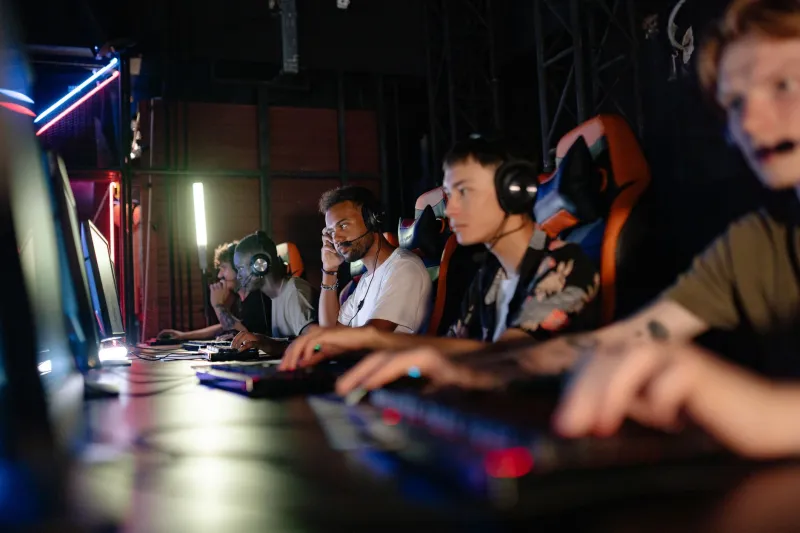
If you've ever dropped into a Vietnamese gaming Discord and wondered why it feels so... organized, you're not imagining things. There's a method to it. And once you understand the logic behind it, you'll probably want to rebuild your own server from scratch.
Western gaming communities tend to treat Discord like a digital living room — casual, loosely structured, and usually one bad PUG session away from total chaos. Vietnamese gaming communities, by contrast, built their servers like operations centers. Not because they're more serious (though they often are), but because they literally had no other choice.
The Problem That Built the Solution
Here's the context that most US gamers miss: Vietnamese online gaming culture developed in an environment of incredible diversity — not just in player skill, but in language, regional dialect, and connection quality. Players from Ho Chi Minh City, Hanoi, and Da Nang don't always communicate the same way. Add in diaspora players from the US, Australia, and Canada who want to stay connected to the Vietnamese gaming scene, and you've got a communication puzzle that a single general chat channel absolutely cannot solve.
The response was pragmatic and brilliant. Vietnamese Discord servers evolved multi-tiered structures that segment players by role, purpose, and even time zone — not just by game. A typical high-functioning Vietnamese gaming server might have dedicated channels for strategy discussion, separate voice rooms for ranked versus casual play, a feedback loop channel where meta discoveries get documented, and a mentorship lane where veteran players field questions from newcomers.
Compare that to the average American gaming Discord, which often tops out at a general chat, one or two voice channels, and maybe a memes section. The difference in organizational depth is striking.
Etiquette That Actually Has Teeth
One of the most underrated elements of Vietnamese squad culture is the concept of earned voice. In many of these communities, there's an informal — sometimes formal — understanding that communication during ranked matches is reserved for actionable callouts. Trash talk, venting, and side conversations get their own space, but they don't bleed into competitive channels.
This isn't just a rule someone wrote in the server description. It's a norm that gets reinforced socially. Senior players model the behavior, newer players observe and adapt, and the whole ecosystem self-regulates in a way that most moderation bots can't replicate.
For US players used to servers where every voice channel is basically a free-for-all, this concept can feel almost foreign. But the results speak for themselves. Teams that communicate with precision and restraint during play — saving the banter for after the match — consistently outperform those that don't. Sports psychologists have been saying this for years. Vietnamese gaming communities just happened to build it into their culture organically.
The Leadership Model That Western Squads Are Missing
Another thing Vietnamese servers do differently: they treat in-game leadership as a real, accountable role. The shot-caller isn't just whoever talks the loudest. In organized Vietnamese squads, there's often a designated in-game leader (IGL) whose communication style is calibrated specifically for high-pressure moments — brief, directional, and calm.
What's interesting is how this role gets developed. Vietnamese gaming communities often have informal mentorship pipelines where experienced IGLs coach up newer players on communication habits, not just mechanical skills. You might see a veteran player running a voice workshop in a Discord stage channel — something that would feel almost alien in most US gaming communities, but is entirely normal in this ecosystem.
The IGL model isn't new to esports — any professional team has one. But Vietnamese casual and semi-pro communities have pushed it down to the grassroots level in a way Western scenes haven't quite managed.
What Cross-Regional Play Forced Them to Invent
Playing across regions means dealing with lag, server inconsistencies, and timing mismatches. Vietnamese squads that regularly play with diaspora members in the US or Europe had to develop communication habits that account for all of this — shorter callouts, more visual pings, and pre-agreed shorthand that doesn't rely on split-second audio clarity.
This is where a lot of the tactical language innovation happened. Vietnamese gaming communities developed compressed callout systems — almost a shorthand dialect — that conveys complex positional information in two or three syllables. When your teammate on a California server is 180ms away from your Hanoi connection, every word counts.
US players who've picked up these habits — often through playing with Vietnamese friends or in mixed servers — report that their communication efficiency goes up noticeably. Less talking, more information. It sounds counterintuitive, but it works.
How to Steal These Strategies for Your Own Server
You don't need to overhaul everything overnight. But here are a few concrete things you can borrow right now:
Separate ranked and casual voice channels — and enforce the distinction. Not with bots, but with social norms. Set the expectation early, model it yourself, and let the culture do the rest.
Designate an IGL for each session, not permanently. Rotating the role builds communication skills across your whole roster and prevents any one player from becoming a communication bottleneck.
Create a meta-discussion channel that's actually used. Not just a dumping ground for YouTube links, but a real space where players document what's working, what isn't, and why. Vietnamese communities treat this as institutional memory. You should too.
Build in post-match debrief rituals. Even five minutes of structured reflection after a session — what worked, what didn't, one thing to fix next time — is something Vietnamese squads do consistently and Western squads skip constantly.
The communication gap between top-performing Vietnamese gaming communities and the average US squad isn't about talent or time investment. It's about structure and culture. The good news? Both of those things are learnable. And the blueprint already exists — it's been running in Vietnamese Discord servers for years.