Why Vietnamese Players Don't Surrender — And What That Stubbornness Is Actually Teaching Us About Winning
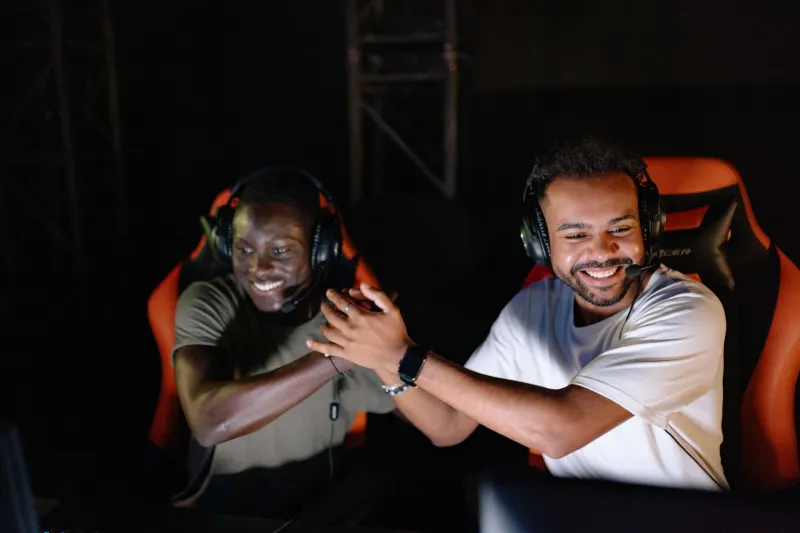
Let's talk about the vote to surrender. You know the one — your team is down 15 kills, your carry just rage-quit, and someone hits F to initiate the mercy vote. In most Western gaming lobbies, that vote passes. Match over, on to the next one.
In a lot of Vietnamese gaming lobbies? That vote fails. And then something strange happens: the team plays on, finds a foothold, and occasionally — not always, but often enough to matter — wins the game they had no business winning.
This isn't a coincidence. It's a cultural pattern with real psychological depth, and understanding it might be one of the most useful things a competitive gamer in the US can do right now.
The Surrender Button as a Western Innovation
It's worth noting that the early surrender mechanic — the formal in-game option to concede a match before it concludes naturally — is largely a Western game design concept, popularized by titles developed with Western player preferences in mind. The reasoning was player-friendly: why waste 20 more minutes on a match that's already decided? Respect people's time. Let them move on.
That logic makes sense on the surface. But it encodes a specific assumption about when a game is actually decided — and Vietnamese competitive culture pushes back hard on that assumption.
The counterargument isn't that surrendering is weak or shameful (though there are communities where that framing exists). It's more nuanced than that: a game isn't over until the conditions for reversal have been genuinely exhausted. And in most games, those conditions persist much longer than a disadvantaged team typically believes.
What the Research Actually Says About Grit
Psychologist Angela Duckworth's research on grit — the combination of passion and perseverance toward long-term goals — has become one of the most widely cited frameworks in performance psychology. Her core finding is that grit is a better predictor of achievement than raw talent in contexts requiring sustained effort under adversity.
Gaming is exactly that kind of context. A competitive match isn't a single moment of skill — it's a sustained performance across dozens of micro-decisions, any one of which can shift momentum. The player or team that maintains belief in their ability to influence outcomes — even when the scoreboard looks bleak — has access to decision-making states that surrendered teams simply don't.
This is where Vietnamese gaming culture aligns almost perfectly with what performance psychology recommends. The refusal to concede isn't irrational stubbornness. It's an application of what researchers call "growth mindset" to real-time competitive conditions — the belief that the current state is not the final state.
The Cultural Roots of Not Quitting
You can't fully understand this mentality without acknowledging its cultural context. Vietnam's modern history is, in large part, a story of prevailing against odds that by any conventional military or geopolitical analysis should have been insurmountable. That historical narrative — of resilience, improvisation, and refusing to accept defeat as inevitable — is genuinely embedded in cultural identity in ways that show up in everyday life, including how people play games.
This isn't to romanticize hardship or suggest that gaming habits are directly caused by historical trauma. It's more that the cultural values that helped a nation navigate extraordinary adversity — adaptability, collective resolve, patience under pressure — happen to translate remarkably well into competitive gaming.
Vietnamese gamers often describe the comeback not just as a skill outcome but as a point of pride. Playing out the string, finding the angle nobody else saw, converting a 1% chance into a win — these are the moments that get celebrated most enthusiastically in Vietnamese gaming communities. The highlight reel isn't the dominant victory. It's the impossible recovery.
Is This Mindset Learnable?
Here's the honest answer: partly. The cultural substrate isn't something you can download. But the behavioral habits that express this mindset absolutely are.
The first habit is recalibrating your threshold for "unwinnable." Most players surrender too early because they're pattern-matching to past losses that looked similar. Breaking that pattern requires actively questioning the assumption — what would have to happen for us to win from here? Is that actually impossible, or just unlikely?
The second habit is momentum awareness. Vietnamese players who specialize in comebacks tend to be excellent at identifying the single play or sequence that could shift the psychological energy of a match. Not trying to win everything at once, but finding the one moment that changes what both teams believe about the game's outcome.
The third habit is team communication during adversity. When a Western team is losing, communication often degrades — blame, silence, or disengagement. Vietnamese squads in deficit situations tend to communicate more, not less. Short, focused callouts. Acknowledgment of what's still working. A shared orientation toward the next objective rather than the current deficit.
The Limits of Never Surrendering
Full transparency here: there are real costs to this approach. A team that never surrenders will occasionally spend 30 minutes on a match that was genuinely unwinnable, burning time and emotional energy that could have gone into a fresh start. At the highest levels of professional play, knowing when a game is actually lost — and accepting it cleanly — is itself a skill.
The Vietnamese gaming community isn't monolithic on this. There are plenty of Vietnamese players who will vote yes on a surrender when the math is truly gone. The mentality isn't about blind refusal — it's about raising the bar for what counts as truly gone.
The lesson for US competitive players isn't "never surrender." It's "surrender later than you think you should, and play better in the meantime." That's a much more actionable takeaway — and for most Western players, it represents a genuine competitive edge that's available right now, no patch required.