No Words Needed: How Vietnamese Players Read Their Teammates Like a Book (And How to Do It Yourself)
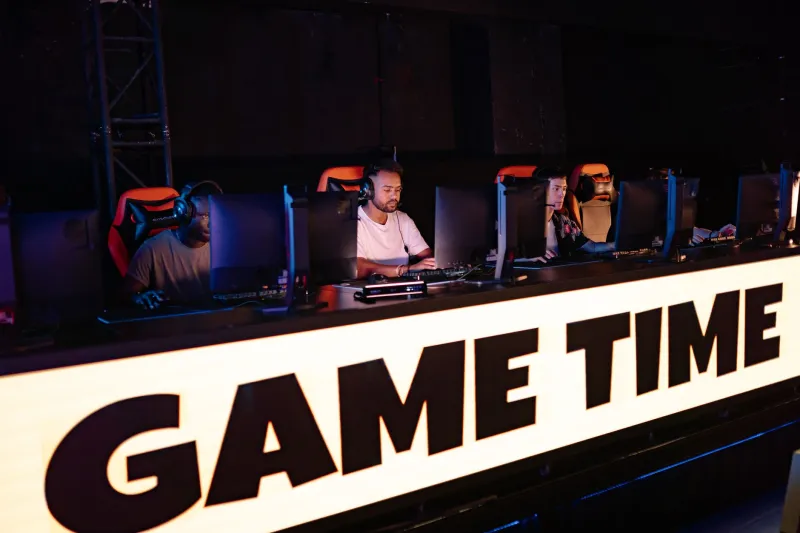
There's a moment every competitive gamer has experienced: your teammate makes a perfect play, covering exactly the angle you needed, at exactly the right time, without a single callout being made. You didn't ask. They didn't announce. It just happened.
For a lot of Vietnamese players, that moment isn't a happy accident — it's the baseline. The ability to read teammates in real-time, without relying on voice comms or typed callouts, is something deeply embedded in how Vietnamese gaming culture developed. And if you're grinding ranked in Valorant, League of Legends, or any team-based game and you feel like your coordination is stuck, understanding how this skill works might be the unlock you've been missing.
Where the Skill Comes From
Before we get into the practical stuff, it's worth understanding the origin. Vietnam's gaming culture grew up in internet cafés — tight, noisy spaces where a team of five might be sitting shoulder-to-shoulder at adjacent machines. Verbal communication was limited (you'd have to shout over a room full of other players), so teams developed a hyper-sensitivity to behavioral cues instead.
You'd watch your teammate's mouse hand tense up. You'd notice them leaning forward. You'd see their screen out of the corner of your eye and clock the fact that they were repositioning before they'd even fully committed to the move. Over thousands of hours in that environment, reading physical and in-game body language became second nature.
Most American gamers play solo in their bedrooms. The feedback loop is almost entirely audio-based — voice comms or nothing. That's not a knock; it's just a different development path that produces different instincts. The good news is that the core skill — reading behavioral and positional cues — is completely transferable to your solo queue experience if you know what to look for.
The Three Things Vietnamese Players Watch First
1. Positioning Momentum, Not Just Position
Most players check where their teammates are. High-level Vietnamese players check where their teammates are going and how fast they're committed to getting there.
There's a difference between a teammate who is near a flank angle and a teammate who is pushing toward a flank angle with deliberate movement. The first is ambiguous. The second is a signal — they're about to create pressure, and your job is to create a complementary threat on the opposite side before the enemy can rotate.
How to practice this: In your next session, spend the first 30 seconds of each round doing nothing but tracking your teammates' movement vectors on the minimap. Don't look at enemies. Just watch where your team is going and ask yourself: what play is this setting up? Over time, pattern recognition kicks in automatically.
2. Resource Behavior as Intent Signaling
How a player manages their resources — ammo, abilities, economy — tells you a lot about what they're planning to do next. A teammate who hasn't used their ultimate in three rounds isn't saving it by accident. They're signaling that a big play is coming.
Vietnamese players, particularly in games like League of Legends where Vietnamese competitive culture runs extremely deep, are exceptionally good at reading ability cooldown states — both their own and their teammates'. When a support's engage ability comes off cooldown, an experienced Vietnamese ADC is already pre-positioning for the fight before the engage happens.
How to practice this: Keep a loose mental track of your teammates' key cooldowns. You don't need a spreadsheet — just a rough sense of "that ability is available" vs. "that ability just got used." Let that awareness inform your positioning in real-time.
3. Hesitation as a Communication Tool
This one's subtle but powerful. When a Vietnamese player pauses briefly before committing to a move, experienced teammates read that hesitation as a request — I need backup before I go in. It's the in-game equivalent of a glance over your shoulder.
Conversely, when a player commits hard and fast, it signals confidence and a need for follow-through, not support. The teammate's job is to amplify the play, not rescue it.
How to practice this: Start paying attention to the timing of your teammates' actions, not just the actions themselves. A slow push is different from a fast push. Adjust your response accordingly rather than defaulting to a fixed rotation.
Building Your Own Behavioral Dictionary
The real secret is that this skill compounds over time spent with the same players. Vietnamese guild culture, which we've written about before, creates an environment where players log hundreds of hours alongside the same teammates. You start building a personal behavioral dictionary for each person — you know that this player always flanks left when they go quiet, or that they over-peek when they're tilted.
American solo queue makes this harder, but not impossible. A few strategies:
- Play with a consistent duo or trio. Even two familiar players dramatically accelerates mutual behavioral learning.
- Review your VODs with teammate behavior in focus. Don't just watch yourself — watch what your teammates were doing when good and bad plays happened.
- After a session, note one behavioral pattern you noticed in a teammate. Even a casual mental note builds the habit of observation.
The Bigger Skill Underneath the Skill
What Vietnamese players are really doing is practicing active attention — a deliberate, continuous awareness of everything happening in their team's ecosystem, not just the immediate threat in front of them. It's the same principle that makes great point guards in basketball or great quarterbacks in football — the ability to hold a wide field of awareness while still executing precise individual actions.
You don't build that by talking more. You build it by watching more carefully. And the best part? You can start practicing in your very next game.