Ping, Marker, Move: How Vietnamese Gamers Built a Whole Tactical Language Without Saying a Word
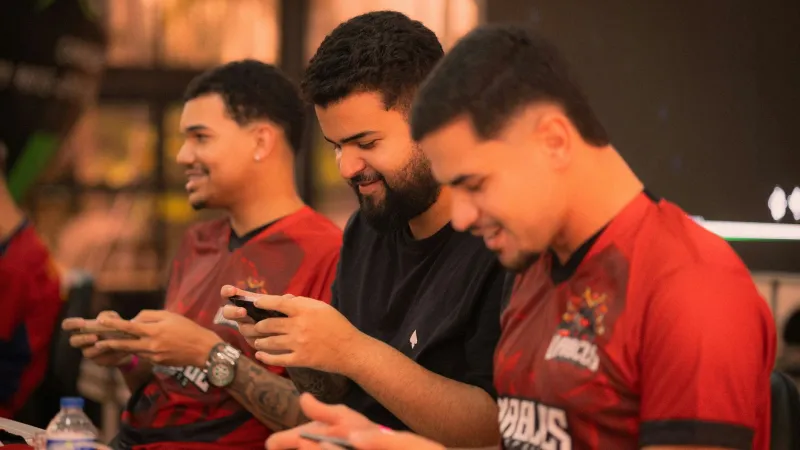
If you've ever queued into a ranked match with a Vietnamese player and felt like you were somehow always a step behind — like they already knew what was coming before you opened your mouth — there's a reason for that. And no, it's not some mystical gaming sixth sense. It's something far more deliberate, and honestly, more impressive: a fully developed silent communication system that most Western players don't even realize exists until it's too late.
At VietGame Hub, we talk a lot about what makes Vietnamese gaming culture distinct. But this particular topic keeps coming up in community discussions, Discord servers, and even in post-match breakdowns from American competitive players who've started asking a very specific question: how are they coordinating this well without voice chat?
Let's break it down.
The Backstory: Why Silence Became a Strategy
To understand why Vietnamese gamers got so good at non-verbal communication, you have to understand the environment where a lot of this culture was built. Internet cafés — or net cafés, as they're known locally — have been the central hub of Vietnamese gaming for decades. These are loud, crowded spaces where twenty or thirty people might be playing in the same room at the same time. Wearing a mic and calling out plays to your teammates means broadcasting your strategy to everyone around you, including opponents who might be sitting three chairs away.
So Vietnamese players adapted. They leaned hard into in-game tools — pings, map markers, minimap movement patterns, ability timing — and turned them into a vocabulary. Over time, that vocabulary got sophisticated. What started as a workaround became a competitive edge.
More Than Just a Ping
Here's where most American players get it wrong: they think a ping is just a ping. You tap the button, a marker shows up on the map, someone sees it. Basic.
But watch a coordinated Vietnamese squad and you'll see something different. Pings aren't just location markers — they're sentences. The sequence of pings matters. The timing relative to ability cooldowns matters. Whether a ping lands on an enemy, a resource node, or open terrain carries different meaning depending on the context of the last thirty seconds of gameplay.
It's the difference between someone pointing at a door and someone pointing at a door twice, then at their watch, then at their teammate's feet. Same gesture, completely different message.
This kind of layered communication shows up in titles across the board — from League of Legends and Mobile Legends: Bang Bang to PUBG and even tactical shooters like Valorant. The tools are built into every game. Vietnamese players just use them at a depth most others don't bother to develop.
Positioning as a Conversation
Beyond pings, there's something even harder to teach: positional language. Where you stand — and when you move — communicates intent to teammates who know how to read it.
In a coordinated Vietnamese team, a support player drifting slightly toward a flank isn't an accident. It's a signal. A carry holding just inside tower range instead of pushing forward isn't playing scared — they're telling their jungler something. These micro-movements function like punctuation in a sentence. Individually, they seem small. Together, they complete a thought.
Western players who've scrimmed against Vietnamese teams often describe a similar experience: feeling like they're reacting while the other side is always already acting. That gap isn't mechanical skill (though the skill is absolutely there). It's the information advantage that comes from a team that's communicating on multiple channels simultaneously — and doing it without making a sound.
Emote Sequences and In-Game Signals
This one surprises people the most. Emotes — those little character animations most players use to taunt or celebrate — have been repurposed in some Vietnamese gaming circles as actual communication tools.
In certain communities, a specific emote at a specific moment carries a pre-agreed meaning. It might signal readiness. It might indicate that a player is low on a consumable. It might be a go-signal for an objective attempt. It sounds almost absurdly lo-fi compared to a crisp callout over voice, but the effectiveness depends entirely on whether your team speaks the same language — and a lot of Vietnamese squads do.
This isn't universal, and it's not codified in any official way. It emerges organically within friend groups and guild communities over time. But that organic quality is exactly what makes it resilient. It's a shared language built through repetition and trust, which means it holds up under pressure in ways that hastily assembled voice-chat teams sometimes don't.
American Competitive Teams Are Paying Attention
Here's where it gets interesting for the US gaming scene. Over the past couple of years, several American competitive coaches and analysts — particularly in the mobile and tactical shooter spaces — have started studying and actively incorporating non-verbal communication frameworks into team training.
The appeal is practical. Voice comms can get cluttered fast. In high-stakes moments, too many people talking creates noise, and noise creates hesitation. A team that can execute a synchronized play through pure in-game signals, without anyone having to speak, removes that bottleneck entirely.
Some US collegiate esports programs have begun dedicating specific practice sessions to what they're calling "silent scrims" — full matches played without voice communication — specifically to force players to develop and refine their in-game signaling. Coaches report that teams who go through this training consistently make better use of pings and map awareness even when voice comms are back on, because they've built a baseline fluency in the visual language of the game.
It's not a coincidence that this framework mirrors what Vietnamese gaming communities have been doing for years.
What It Actually Takes to Learn This
Let's be real — this isn't something you pick up in a weekend. Building non-verbal communication fluency with a team takes time, repetition, and a willingness to lose some matches while the language develops. You have to play together enough that certain movements and signals start to feel automatic rather than interpreted.
But the good news is that the foundation is already there in every game you're playing. The ping wheel, the minimap, the ability timers, the positioning space — all of it is a canvas. Vietnamese gaming culture didn't invent new tools. It just figured out how to use the existing ones at a higher resolution.
If you're part of a regular squad and you want to start experimenting, the entry point is simple: pick one signal and agree on what it means. One specific ping combo for "I'm ready to engage on your next ability." One positional habit that communicates "I'm setting up a flank, delay them." Start small, be consistent, and watch how quickly the language starts to expand on its own.
The Bigger Picture
There's something worth sitting with here beyond the tactical stuff. Vietnamese gaming communities built this system not because they wanted to be clever, but because they had to adapt to their environment. The constraints of the café scene, the noise, the proximity to opponents — all of it pushed them toward a more disciplined, visually fluent style of play.
That's a reminder that some of the most effective innovations in gaming culture don't come from the biggest studios or the most-watched streamers. They come from communities solving real problems with the tools they have.
And sometimes, the quietest players in the room are the ones running the most complex conversations.