Blood Bonds vs. Business Cards: What Vietnamese Gaming Guilds Can Teach American Players About Real Community
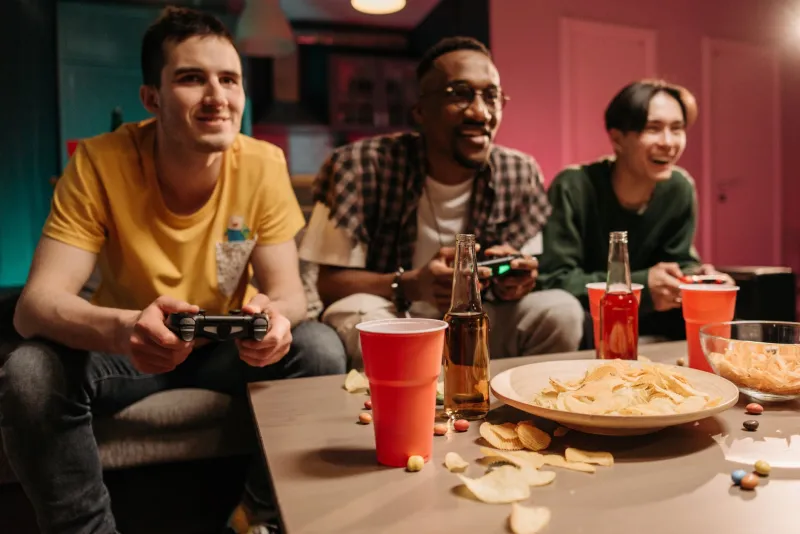
Picture this: a Vietnamese gamer logs into their favorite MMO after a rough week. Before they even load into a dungeon, their guild chat is already buzzing — someone's asking how their university exams went, another member is sharing a home-cooked meal photo, and the guild leader is organizing a group voice call just to hang out. No raid scheduled. No loot to split. Just people checking in on each other.
Now picture a typical Western guild experience. You apply, submit your DPS logs, get accepted, raid on Tuesday and Thursday, and if you find a guild with higher progression rankings three months later, you bounce. No hard feelings. It's just how things work.
These two scenarios aren't exaggerations — they reflect genuinely different cultural philosophies about what online gaming communities are for. And if you're an American gamer who's ever wondered why your guild feels more like a LinkedIn network than an actual friend group, the Vietnamese approach might have some answers worth stealing.
Why Vietnamese Guilds Feel Like Extended Families
Vietnamese culture places enormous weight on collective identity and long-term relationships. The concept of tình nghĩa — a deep sense of loyalty and emotional obligation to people you're close to — doesn't disappear when someone boots up a game. It carries straight into digital spaces.
In Vietnamese gaming communities, guilds aren't just organizational units. They're social anchors. Members often come from the same city, the same internet café, or even the same school. When someone joins, they're not just filling a role — they're entering a web of mutual responsibility. Senior members mentor newer players not because there's a recruitment pipeline to manage, but because that's just what you do for people who are part of your circle.
This translates into some pretty remarkable real-world behaviors. Vietnamese guild members regularly help each other with things that have nothing to do with the game — sharing job leads, lending money during tough times, showing up to weddings and funerals. The guild GroupChat on Zalo (Vietnam's dominant messaging app) often looks less like a gaming coordination channel and more like a family group text.
The Western Guild: Efficient, Functional, and Kind of Lonely
To be fair to American gamers, the transactional guild model isn't born from coldness — it's born from a gaming culture that prizes individual achievement and upward mobility. Western MMO design, especially in titles like World of Warcraft, has historically rewarded players who optimize relentlessly. Guilds became vehicles for that optimization.
The result is a system that works really well for progression and really poorly for belonging. Players develop spreadsheet-worthy strategies, clear content efficiently, and then scatter the moment a better opportunity appears. Loyalty is conditional on performance. Membership is contingent on utility.
And honestly? A lot of American gamers feel the emptiness of that. The rise of cozy gaming, the explosion of community-driven Discord servers, the nostalgia boom around old MMO guilds — all of it points to players quietly craving something more than a well-organized raid schedule.
Mutual Aid as a Gaming Mechanic
One of the most fascinating things about Vietnamese guild culture is how mutual aid gets baked into gameplay itself. Senior players in Vietnamese MMO guilds routinely spend hours farming resources for newer members — not because they need anything in return, but because helping someone level up is seen as a genuine investment in the community's future.
This creates a generational continuity that Western guilds rarely achieve. A Vietnamese guild that started in a Ragnarok Online café in 2005 might still have active members today, many of whom have aged from teenagers into adults with full-time jobs and families. The game might have changed. The bond hasn't.
Compare that to the average Western guild lifespan, which often collapses the moment a game's active playerbase drops or a new title launches. The community dissolves because it was built around the game rather than around the people playing it.
What American Players Can Actually Borrow
You don't need to overhaul your entire social philosophy to take something useful from this. A few practical shifts can make a real difference:
Invest in off-game connection. Create spaces — a Discord channel, a group chat, literally anything — where guild members can talk about stuff that has nothing to do with the game. Sports, memes, life updates. The communities that survive game droughts are the ones with relationships that exist outside the game itself.
Mentor intentionally. Vietnamese guild culture treats knowledge transfer as a social obligation, not a favor. If you're an experienced player, actively bringing newer members up to speed builds loyalty that no loot reward system can replicate.
Celebrate milestones that aren't game achievements. Someone in your guild got a new job? Graduated? Had a kid? Acknowledge it. These moments are what turn a roster into a community.
Slow down the recruitment process. Vietnamese guilds are notoriously selective — not because of skill requirements, but because cultural fit matters. Bringing in someone who shares the group's values is worth more long-term than adding a top-tier player who'll leave in two months.
The Bigger Picture
There's a reason Vietnamese esports teams are known for their cohesion and why Vietnamese gaming communities tend to outlast their Western counterparts across multiple game cycles. It's not just talent. It's the social infrastructure underneath the gameplay.
American gaming culture is genuinely starting to shift in this direction — the success of community-first streamers, the loyalty around niche gaming Discord servers, the emotional weight people attach to their Animal Crossing islands — all of it suggests players are hungry for exactly what Vietnamese guild culture has been delivering for decades.
The game is just the excuse to get together. The community is the actual point. Vietnamese gamers figured that out a long time ago, and it might be the most underrated competitive advantage in the room.