Chill and Grind: How Vietnamese Gamers Are Showing Burnt-Out Gen Z Players a Better Way to Play
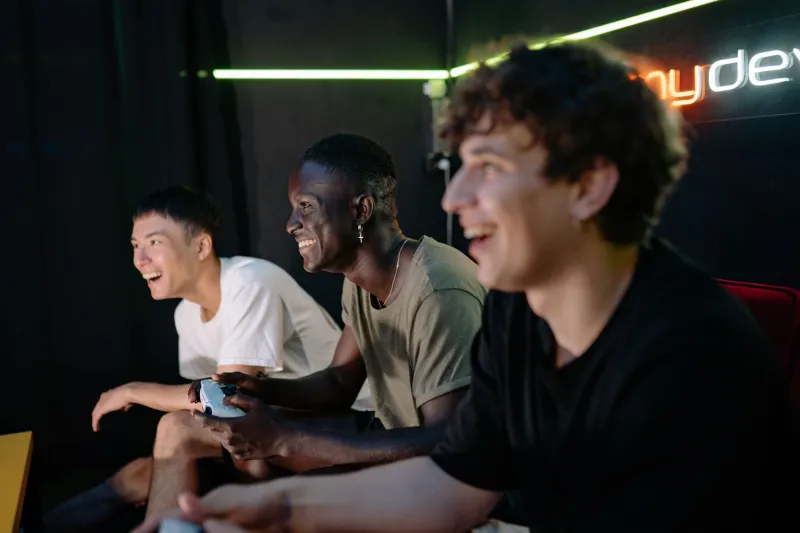
Let's be honest — gaming stopped being fun for a lot of people. Somewhere between ranked decay systems, streamer-fueled FOMO, and teammates who treat a casual match like a job interview, playing video games started feeling like work. Gen Z especially is feeling it. Studies keep rolling in about gaming-related stress, and the burnout conversations on Reddit and TikTok are getting louder every month.
But here's the thing: there's a corner of the global gaming world that never really fell into that trap. Vietnamese gaming culture — built in internet cafés, shaped by community rather than competition, and seasoned by years of making the most out of limited resources — has quietly been running a different playbook. And American players are starting to notice.
What 'Chill Grinding' Actually Means
The phrase gets thrown around loosely, but in Vietnamese gaming communities, chill grinding has a pretty specific vibe. It's the idea that you can make consistent progress in a game — leveling up, farming resources, improving your mechanics — without treating every session like a high-stakes audition. You're moving forward, but you're not white-knuckling the controller to get there.
In Vietnamese internet cafés and Discord servers, it's common to see players deep in an MMO grind while chatting, sharing food recommendations, or just vibing to music together. The game is the backdrop, not the boss. Progress happens, but it happens alongside the social experience, not instead of it.
That's a fundamentally different relationship with games than what a lot of American players have been conditioned to expect. Here, the culture often screams that if you're not climbing, you're falling behind. Vietnamese communities tend to push back on that idea hard.
Why Ranked Culture Is Burning People Out
The American gaming ecosystem has a pressure problem, and it starts at the design level. Games like League of Legends, Valorant, and Apex Legends are engineered around ranked systems that create a constant sense of urgency. Every loss feels meaningful in the worst way. Every session carries stakes. And when you add in the parasocial pressure of watching pros and streamers perform at a level most players will never reach, the gap between where you are and where the culture says you should be feels enormous.
Gen Z players — who already navigate a world full of performance metrics, social media comparison, and economic uncertainty — are particularly vulnerable to this kind of pressure bleed. When gaming becomes another space where you're being evaluated and ranked, the escape hatch disappears.
Burnout follows. Players quit games they used to love. Some step away from gaming entirely. Others just feel vaguely miserable while still logging in every night, which might actually be worse.
The Vietnamese Model: Social First, Score Second
What Vietnamese gaming communities figured out — partly by necessity, partly by cultural default — is that the social layer is the whole point. Games are venues for hanging out, not just arenas for competing. A group of friends might spend three hours in the same MMO zone, barely progressing the main quest, but laughing the entire time. That session counts as a win because the experience was good, full stop.
This shows up structurally in how Vietnamese guilds and gaming groups are organized. Mentorship is baked in. Veterans help newer players not because there's a leaderboard reward for it, but because the community's strength depends on everyone staying engaged and having fun. Pressure is distributed socially rather than concentrated on individual performance metrics.
There's also a notable lack of shame around playing at your own pace. In a lot of Western gaming spaces, admitting you play casually or that you don't care about your rank feels like a confession. In Vietnamese communities, it's just... normal. Not everyone is trying to go pro, and nobody expects them to.
What American Developers Are (Finally) Starting to Get
The industry is slowly catching on. Games like Final Fantasy XIV have built massive, devoted communities specifically by leaning into low-pressure progression and social connection. Stardew Valley became a cultural phenomenon in part because it offered a grinding experience completely stripped of competitive anxiety. Even big studios are experimenting with seasonal content that rewards participation over performance.
Some of this is driven by data — developers can see when players churn out of ranked modes and migrate to casual playlists. But some of it is genuine cultural influence. As Southeast Asian gaming communities grow in global visibility, their values are seeping into design conversations. The idea that a game can retain players through belonging rather than ranking is gaining traction in boardrooms that used to think pure competition was the only retention lever worth pulling.
How to Actually Bring This Energy Into Your Own Play
You don't have to relocate to Hanoi to adopt a healthier gaming mindset. A few shifts go a long way:
Find your people first, then find your game. Vietnamese gaming culture starts with community and builds outward. Instead of picking the most competitive game and hoping to find good teammates, look for a community with the right vibe and let the game choice follow.
Set session goals that aren't score-based. Try something like 'I want to learn one new mechanic today' or 'I'm going to help a friend get through this dungeon.' Progress that isn't tied to a rank number is still progress.
Make the chat part of the point. Vietnamese gamers treat in-game and Discord chat as central to the experience, not a distraction from it. Let the conversation be the game sometimes.
Give yourself permission to grind slowly. Not every session needs to move the needle significantly. Consistency over intensity is a sustainable long game — and it's a lot more enjoyable.
The grind doesn't have to hurt. Vietnamese gaming culture has known that for a while. The rest of us are just catching up.